
Can You Feel a Dental Implant Screw?
A properly integrated dental implant screw is usually not felt as a separate metal object inside the jaw during normal daily activities.
The implant fixture sits within bone and becomes mechanically stabilized through osseointegration. Unlike a natural tooth, it has no periodontal ligament surrounding its root. However, patients can still perceive pressure and chewing forces through neighboring tissues, muscles, bone, and sensory pathways. This phenomenon is known as osseoperception. Research shows that implant-supported teeth retain meaningful tactile sensitivity, although their sensory response differs from natural teeth.
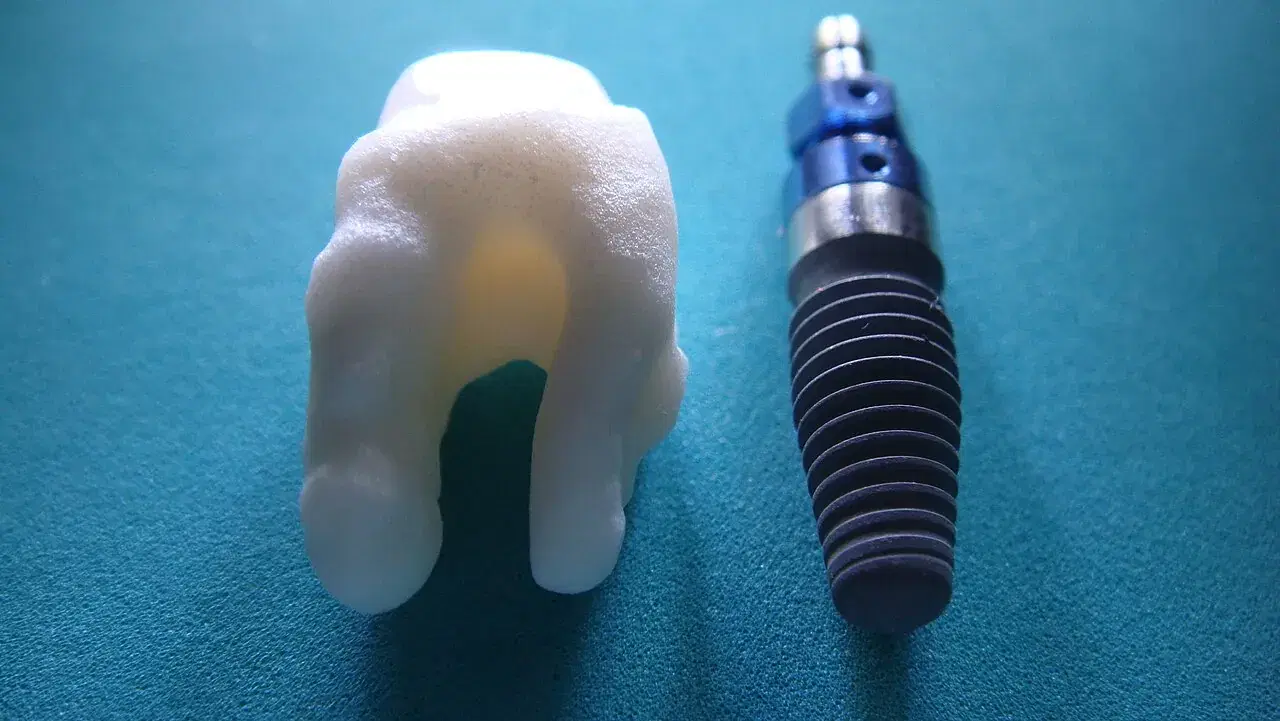
What Part of a Dental Implant Is Actually the Screw?
The implant screw commonly refers to the fixture placed inside the jawbone, although implant restorations can contain another smaller prosthetic screw.
A single implant restoration usually consists of an implant fixture, an abutment, and a crown. The fixture is positioned within the bone and normally cannot be touched or directly sensed after healing. A prosthetic screw may secure the abutment or crown to that fixture. Problems involving these components can therefore feel different. A loose crown or abutment screw may produce movement even while the implant fixture remains completely integrated and stable within the jaw.
Why Can You Feel Pressure From an Implant if the Screw Cannot Be Felt?
Pressure can be perceived around an implant because surrounding bone, muscles, joints, mucosa, and other sensory structures still transmit information during chewing.
Natural teeth contain highly sensitive mechanoreceptors within the periodontal ligament. These receptors disappear when the tooth is removed. Implant-supported restorations instead rely on other sensory pathways to provide feedback. This replacement sensation is called osseoperception. A systematic review found that implant-supported restorations have slightly reduced tactile sensitivity compared with natural teeth. However, they provide substantially greater tactile perception than conventional complete dentures, allowing patients to detect functional pressure during chewing.
Does a Dental Implant Feel Like a Natural Tooth?
A well-integrated dental implant can feel functionally similar to a natural tooth, but its sensory feedback is not biologically identical.
Natural teeth receive precise pressure information through periodontal ligament receptors. Dental implants lack this ligament, so force perception depends on other sensory structures. Research comparing tactile thresholds shows that implant restorations remain sensitive during function but generally require stronger stimulation than natural teeth. Many patients adapt to this difference and stop consciously noticing the implant during ordinary chewing. The restoration can therefore feel natural in everyday use even though its underlying sensory mechanism remains different from a biological tooth.
Is It Normal to Feel the Implant During the First Days?
Tenderness, pressure, swelling, or awareness of the surgical area can occur during early implant healing and does not mean the metal fixture is being directly felt.
Implant placement creates a surgical wound in gum tissue and bone. Early sensations therefore originate mainly from healing tissues rather than from sensory nerves inside the titanium fixture. The area can feel different when speaking, chewing, or touching nearby tissues during the initial recovery period. These symptoms should gradually improve rather than intensify. Persistent or increasing pain, swelling, discharge, or new mobility deserves assessment because these changes are not explained simply by normal adaptation to the implant.
When Should an Implant Stop Feeling Unusual?
The sensation of having a new implant should generally become less noticeable as surgical tissues heal and the patient adapts to the restoration.
The exact adaptation period depends on whether the implant is still healing or already supports its final crown. Osseointegration develops through continuing bone formation and remodeling around the implant surface. Once the restoration enters normal function, sensory adaptation can further improve how natural chewing feels. Persistent awareness is not automatically abnormal, especially when a new crown changes bite contact. However, discomfort that increases instead of settling should be distinguished from ordinary sensory adaptation and investigated for mechanical or biological causes.
What Sensations Around a Dental Implant Need Attention?
Certain sensations around an implant are more concerning than normal pressure awareness and should prompt evaluation when they persist or worsen.
Movement of the actual implant or crown
Increasing pain during chewing
Persistent throbbing discomfort
Swelling around the implant
Bleeding that repeatedly develops around the site
Pus or an unpleasant taste
New numbness or altered lip sensation
Gum recession exposing implant components
A clicking sensation during chewing
A bite that suddenly feels different
These findings can reflect several different problems, so the sensation alone cannot establish the diagnosis.
Can You Feel an Implant Screw if It Becomes Loose?
A loose prosthetic screw can create movement, clicking, or an unstable crown sensation, but this does not necessarily mean the implant fixture has failed.
Technical screw loosening is a recognized complication of implant-supported restorations. Long-term studies have documented screw and abutment loosening even when implants remain integrated. The movement may occur in the crown or abutment rather than inside the bone. This distinction matters because a loose prosthetic component can often be repaired while preserving the underlying implant. Continuing to chew heavily on a mobile restoration can increase mechanical stress, so new movement should be assessed rather than ignored.
Can the Dental Implant Itself Become Loose?
True movement of the implant fixture is abnormal because an osseointegrated implant should remain rigidly connected to the surrounding bone.
Mobility can indicate failure or loss of osseointegration, particularly when the fixture itself moves rather than only the crown. Implant stability depends on a direct structural and functional relationship between living bone and the implant surface. Progressive infection, severe bone loss, early healing failure, or excessive mechanical stress can compromise that relationship. A moving crown must therefore be differentiated from a moving implant fixture. The first can represent a prosthetic complication, while true fixture mobility raises greater concern about implant stability.
Can Gum Recession Make the Implant Screw Feel More Noticeable?
Gum recession can make implant components more visible or accessible near the gumline, although the portion embedded deeply within bone remains different from exposed restorative components.
Soft tissue recession around implants is a recognized long-term condition. A large systematic review found that peri-implant soft tissue dehiscence is relatively common across published studies. Thin soft tissue and limited keratinized tissue were among the associated factors. When the gum margin moves downward, metal surfaces or implant threads may become visible in some cases. Patients may then notice a rougher contour near the gumline, especially during brushing or tongue contact.
Does Pain Mean You Are Feeling the Implant Screw?
Pain around a dental implant usually comes from surrounding tissues or complications rather than from the titanium implant itself generating pain.
An implant fixture contains no nerves capable of producing pain independently. Discomfort can instead originate from gum inflammation, surrounding bone, excessive bite forces, infection, adjacent structures, or nerve irritation. Peri-implant diseases are inflammatory conditions affecting tissues surrounding implants. Peri-implantitis additionally involves progressive supporting bone loss. Consequently, new pain developing around a previously comfortable implant should be viewed as a symptom requiring a cause, rather than proof that the metal screw has suddenly become physically detectable.
Can Peri-Implantitis Make an Implant Feel Different?
Peri-implantitis can change how an implant area feels because inflammation and progressive bone loss develop in tissues supporting the implant.
Clinical signs can include bleeding, swelling, suppuration, deeper probing measurements, gum recession, and radiographic bone loss. Pain is not required for peri-implantitis to exist, meaning an implant can develop disease while still feeling relatively normal. As disease progresses, discomfort or changes around the restoration may become more noticeable. This is why sensation alone cannot confirm implant health. Long-term monitoring examines the surrounding tissues and bone rather than relying solely on whether the patient can feel something unusual.
Can You Feel an Implant More When Chewing Hard Food?
An implant can feel more noticeable under strong chewing forces because implant-supported restorations transmit pressure through bone without the periodontal ligament found around natural teeth.
Natural teeth have sensitive ligament receptors that provide detailed information about small changes in force. Implants rely on osseoperception from other tissues instead. Studies measuring tactile sensitivity consistently show that implants retain useful force perception, although thresholds differ from natural teeth. Consequently, patients may notice firm foods or unexpected hard particles differently through an implant-supported crown. This does not mean the fixture is moving or being directly felt inside the jaw.
Can an Implant Cause Numbness or Tingling?
Numbness or tingling after implant placement can occur when sensory nerves are irritated or injured, particularly during procedures involving the lower jaw.
These sensations differ from ordinary awareness of the implant screw. A recent systematic review found nerve-related symptoms after mandibular implant surgery, with prevalence decreasing substantially after the early postoperative period. Symptoms can include numbness, tingling, altered sensation, or neuropathic discomfort affecting the lip, chin, gum, or nearby region. Persistent sensory changes deserve prompt assessment because management can depend on the mechanism and timing of nerve injury. New neurological symptoms should therefore not be dismissed as normal implant adaptation.
Can a New Implant Crown Make the Screw Feel More Obvious?
A new implant crown can make the area feel unfamiliar when its shape or bite contact differs from the tooth or restoration that previously occupied the space.
The sensation usually comes from the restoration interacting with the opposing teeth and surrounding oral tissues. Implants have meaningful tactile perception through osseoperception, so patients can detect differences in contact. A crown that contacts too early during biting may therefore feel unusually prominent even when the implant fixture remains completely stable. The important distinction is between noticing bite pressure and experiencing actual implant movement. Persistent heavy contact can also contribute to mechanical complications and should be corrected when clinically confirmed.
Can You Feel Implant Threads With Your Tongue?
Implant threads should not normally be exposed to the tongue when an implant is properly surrounded by bone and soft tissue.
If a rough metallic surface becomes newly noticeable near the gumline, recession, tissue dehiscence, or loss of supporting structures may have exposed part of the implant. Soft tissue recession can occur even around implants without active peri-implant disease, especially when tissue thickness is limited. Progressive recession accompanied by bleeding, suppuration, or bone loss creates different concerns and requires assessment for peri-implant disease. A visible or palpable metal surface should therefore be evaluated rather than assumed to be a normal feature of an implant.
Can You Always Tell When an Implant Has a Problem?
An implant problem cannot always be detected from sensation because early peri-implant disease and some mechanical complications may cause few noticeable symptoms.
Peri-implant mucositis is primarily identified through clinical inflammation and bleeding on gentle probing. Peri-implantitis additionally involves progressive bone loss. Neither condition requires significant pain during its early stages. Mechanical problems can also remain subtle before visible movement develops. Regular implant maintenance therefore includes examination of soft tissues, cleaning access, bite, prosthetic components, and bone when imaging is indicated. Waiting until the implant feels painful or loose can allow a manageable condition to progress further.
Should a Healthy Dental Implant Be Noticeable During Daily Life?
A healthy, fully restored dental implant should usually become an ordinary part of daily function rather than feeling like a metal screw inside the jaw.
Patients may still distinguish an implant from a natural tooth when concentrating on pressure or tactile differences. Research on osseoperception shows that implant restorations provide meaningful sensory feedback despite lacking a periodontal ligament. This allows chewing forces to feel increasingly familiar after adaptation. Constant pain, movement, clicking, worsening pressure, or new neurological symptoms are different from normal tactile perception. A stable implant can therefore be sensed functionally without the patient physically feeling the titanium fixture itself.