
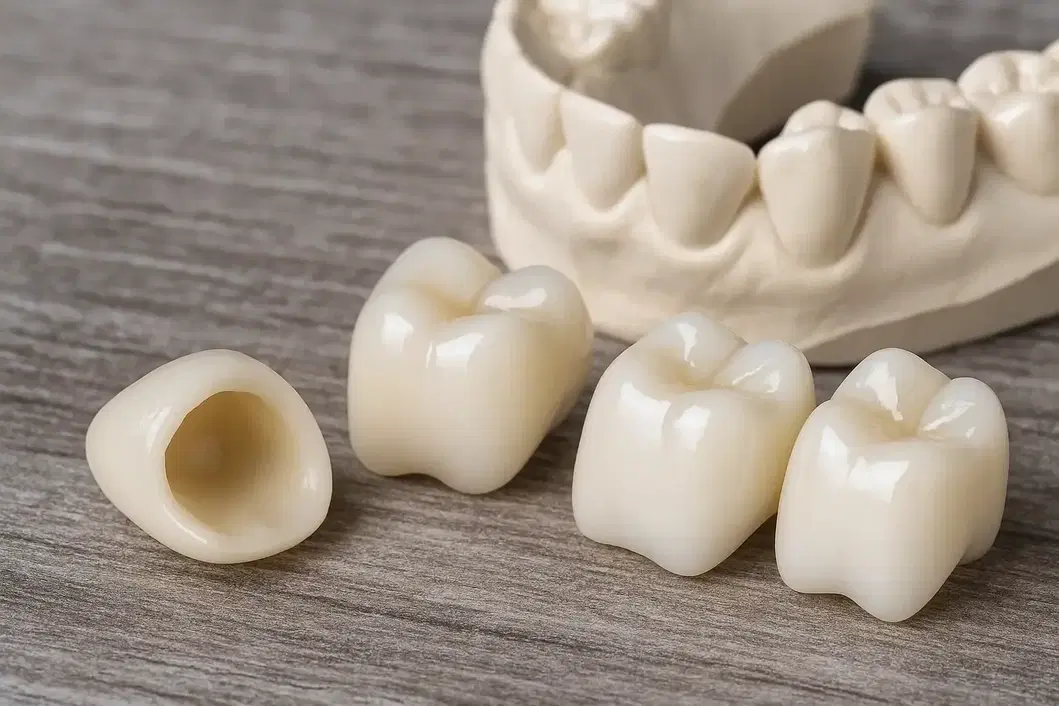
What Is a Zirconium Crown?
A zirconium crown is a tooth-coloured dental restoration that covers a damaged, weakened or unattractive tooth. Dentists actually use zirconia, a strong ceramic material made from zirconium dioxide, to produce these crowns. A zirconium crown restores the tooth’s shape, strength, colour and chewing function. Dentists also place zirconium crowns over dental implants.
How Are Zirconium Crowns Made?
The dentist prepares the tooth and records its shape with a digital scanner or dental impression. A technician or an in-house digital system then designs the crown with CAD software and mills it from a zirconia block. The dental team sinters, colours, glazes and polishes the crown before the dentist checks its fit, appearance and bite.
Who Is a Good Candidate for Zirconium Crowns?
Dentists may recommend zirconium crowns to patients who have broken teeth, large fillings, severe discolouration, worn teeth or root canal-treated teeth. Patients may also choose zirconium crowns to complete dental implants or improve their smile.
The dentist should treat active decay, extensive gum disease and poor oral hygiene before placing crowns. Patients who grind their teeth may need a night guard to reduce excessive pressure on the restorations.
Can Dentists Place Zirconium Crowns Without Shaving Teeth?
Dentists usually need to reshape a natural tooth before placing a full zirconium crown. This preparation creates enough space for the restoration and allows the dentist to achieve a secure fit and balanced bite.
The required reduction varies according to the zirconia type, tooth position and clinical condition. Some modern zirconia materials require less preparation, but dentists cannot normally place a full crown over an untreated natural tooth without increasing its size. An implant-supported crown does not require natural tooth shaving because the dentist attaches it to an implant.
How Many Crowns Are Needed?
The patient’s dental condition and cosmetic goals determine the number of zirconium crowns. A dentist may place one crown to repair a single damaged tooth or several crowns to improve multiple teeth.
For a smile makeover, the dentist evaluates the patient’s smile line and treats only the visible teeth that require crowns. Patients should not crown healthy teeth unnecessarily when less invasive treatments can achieve the desired result.
Can Dentists Complete Zirconium Crowns in One Visit?
Dentists can sometimes complete a zirconium crown in one visit when the clinic uses an in-house CAD/CAM scanner, milling unit and zirconia furnace. The dental team scans, designs, produces and places the crown during the same appointment.
Traditional treatment usually requires two visits. During the first visit, the dentist prepares the tooth, takes an impression and places a temporary crown. During the second visit, the dentist removes the temporary restoration and fits the permanent crown.
Does Zirconium Crown Treatment Hurt?
Dentists apply local anaesthesia before preparing sensitive natural teeth, so patients should not feel sharp pain during treatment. Patients may feel pressure, vibration or movement while the dentist reshapes the tooth.
Some patients experience temporary gum tenderness or tooth sensitivity after treatment. Patients should contact their dentist when severe pain, swelling or bite problems continue or increase.
What Can You Eat After Zirconium Crown Treatment?
Patients should wait until the local anaesthesia wears off before eating hot food or chewing normally. This precaution helps them avoid burning the mouth or biting the tongue and cheek.
Patients can initially choose soft foods such as eggs, pasta, rice, yoghurt and soup. They should avoid very hard, sticky or chewy foods, especially while wearing a temporary crown. After the dentist fits the permanent crown and confirms the bite, most patients can gradually return to their normal diet.
How Long Do Zirconium Crowns Last?
Zirconium crowns commonly last around 8 to 10 years, and many patients use them for longer when they maintain good oral hygiene and attend regular dental examinations. Clinical research also reports high long-term survival rates for zirconia restorations.
Daily brushing, interdental cleaning and regular check-ups help protect the supporting tooth and gums. Tooth grinding, poor oral hygiene, untreated decay and biting hard objects can shorten the crown’s lifespan.
Do Zirconium Crowns Stain or Change Colour?
Zirconium crowns resist stains and generally maintain their colour better than natural teeth or composite restorations. Coffee, tea, tobacco and surface wear may still affect the glaze or create external deposits over time.
Professional cleaning can remove many surface stains. Teeth-whitening products will not lighten zirconium crowns, so patients should complete whitening before choosing the final crown shade whenever possible.
How Is Zirconium Crown Treatment Performed in Turkey?
Dentists in Turkey perform zirconium crown treatment by examining the teeth, preparing them, taking digital measurements and fitting custom-made crowns. The process usually requires several stages and may take more than one appointment.
Initial consultation: The dentist examines the teeth, gums and bite. They may take X-rays or digital scans to identify decay, infection or structural damage.
Treatment planning: The dentist selects the number, shape and colour of the zirconium crowns according to the patient’s oral health, facial features and smile goals.
Preliminary dental treatment: The dentist treats cavities, gum disease or infected teeth before starting crown preparation. Some patients may need fillings or root canal treatment.
Local anaesthesia: The dentist numbs the treatment area to keep the patient comfortable during tooth preparation.
Tooth preparation: The dentist removes a controlled amount of enamel to create enough space for the crown. Dental crowns cover the entire visible part of the prepared tooth.
Digital scan or impression: The dentist records the shape of the prepared teeth and surrounding structures. A dental laboratory uses these measurements to produce custom zirconium crowns.
Temporary crown placement: The dentist may fit temporary crowns to protect the prepared teeth while the laboratory creates the permanent restorations.
Trial fitting: The dentist checks the zirconium crowns’ colour, shape, margins, alignment and bite. They make adjustments when necessary.
Permanent bonding: The dentist removes the temporary restorations and securely cements the final zirconium crowns onto the prepared teeth.
Final checks and aftercare: The dentist checks the bite again and explains brushing, flossing and follow-up care.
Types of Zirconium Crowns Available in Turkey
We offer several types of zirconium crown in Turkey to meet different aesthetic and functional needs. We select the most suitable zirconium crown based on the patient's tooth condition, smile goals, bite requirements, and budget.
Zirconium crowns are known for their durability, natural appearance, and metal-free structure. Modern dental technology allows us to customize each restoration to match the patient's natural teeth.
Monolithic Zirconia Crowns
We create monolithic zirconia crowns from a single block of zirconia. This design provides excellent strength and durability, making it a popular choice for back teeth that experience higher chewing forces.
Feature | Details |
|---|---|
Strength | High fracture resistance |
Appearance | Natural but slightly less translucent |
Best For | Molars and premolars |
Durability | Excellent |
High-Translucent Zirconia Crowns
We use high-translucent zirconia to achieve a more natural appearance. These crowns allow more light transmission, helping them closely resemble natural enamel.
Feature | Details |
|---|---|
Aesthetics | Highly natural appearance |
Translucency | Enhanced light transmission |
Best For | Front teeth and smile makeovers |
Durability | Strong for everyday use |
Layered Zirconia Crowns
We combine a zirconia framework with a porcelain layer to create layered zirconia crowns. This approach allows us to achieve detailed color matching and enhanced aesthetics.
Feature | Details |
|---|---|
Appearance | Highly customized aesthetics |
Color Matching | Excellent |
Best For | Visible front teeth |
Customization | High |
Multilayer Zirconia Crowns
We manufacture multilayer zirconia crowns with gradual color transitions that mimic natural tooth shades. This technology improves the overall appearance while maintaining durability.
Feature | Details |
|---|---|
Color Gradient | Natural shade transitions |
Aesthetics | Very natural appearance |
Strength | High |
Best For | Full smile restorations |
Implant-Supported Zirconia Crowns
We place zirconia crowns on dental implants to restore missing teeth. These restorations provide both function and aesthetics while maintaining a natural appearance.
Feature | Details |
|---|---|
Support | Attached to dental implants |
Appearance | Natural-looking restoration |
Function | Restores chewing ability |
Best For | Single or multiple missing teeth |
Comparison of Zirconium Crown Types
Crown Type | Aesthetics | Strength | Common Use |
|---|---|---|---|
Monolithic Zirconia | Good | Very High | Back teeth |
High-Translucent Zirconia | Excellent | High | Front teeth |
Layered Zirconia | Excellent | High | Cosmetic smile design |
Multilayer Zirconia | Excellent | High | Full-mouth restorations |
Implant-Supported Zirconia | Excellent | High | Missing tooth replacement |
We evaluate every patient's dental structure and treatment goals before recommending a zirconium crown type. This personalized approach helps us balance aesthetics, durability, and long-term function for each restoration.
How Long Does Zirconium Crown Treatment Take in Turkey?
Dentists in Turkey usually complete zirconium crown treatment in two appointments. During the first appointment, the dentist examines the mouth, prepares the teeth and takes digital scans or impressions. The dentist then places temporary crowns to protect the prepared teeth.
A dental laboratory designs and produces the permanent zirconium crowns. The dentist fits the crowns during the second appointment, checks their colour and shape, adjusts the bite and bonds them securely. The laboratory schedule and number of crowns determine whether the process takes a few days or approximately two weeks.
Some Turkish dental clinics use in-house CAD/CAM systems to design and manufacture zirconia crowns more quickly. These clinics may complete a single crown in one visit when the patient’s dental condition allows it. However, multiple crowns, root canal treatment, gum treatment or dental implants can extend the overall treatment period. Digital production supports an efficient workflow, but the dentist must still check the crown’s fit and bite carefully.
Zirconium Crown Recovery Timeline
First few hours: Local anaesthesia may keep the mouth numb. Patients should avoid eating until normal sensation returns so they do not bite their tongue or cheek.
First 24–48 hours: Patients may notice mild gum tenderness, pressure or sensitivity to hot and cold foods. They should choose softer foods and avoid chewing hard or sticky items on temporary crowns.
First week: The gums usually begin to settle, and mild sensitivity should gradually improve. Patients can return to normal activities immediately, but they should clean around the crowns carefully.
After one to two weeks: Most patients adapt to the shape and bite of their zirconium crowns. The crowns should feel comfortable when chewing. Temporary sensitivity can occur after crown placement, but severe or persistent pain does not represent a normal recovery.
Zirconium Crown in Turkey Cost 2026
In 2026, a zirconium crown in Turkey generally costs between $150 and $400 per tooth. The dentist calculates the final price according to the number of crowns, zirconia type, laboratory quality and condition of the natural teeth. Current Turkish clinic price guides publish similar per-tooth ranges.
Patients can expect the following estimated costs:
Single zirconium crown: $150–$400
8 zirconium crowns: $1,400–$3,000
16 zirconium crowns: $2,500–$5,500
20 zirconium crowns: $3,000–$7,000