
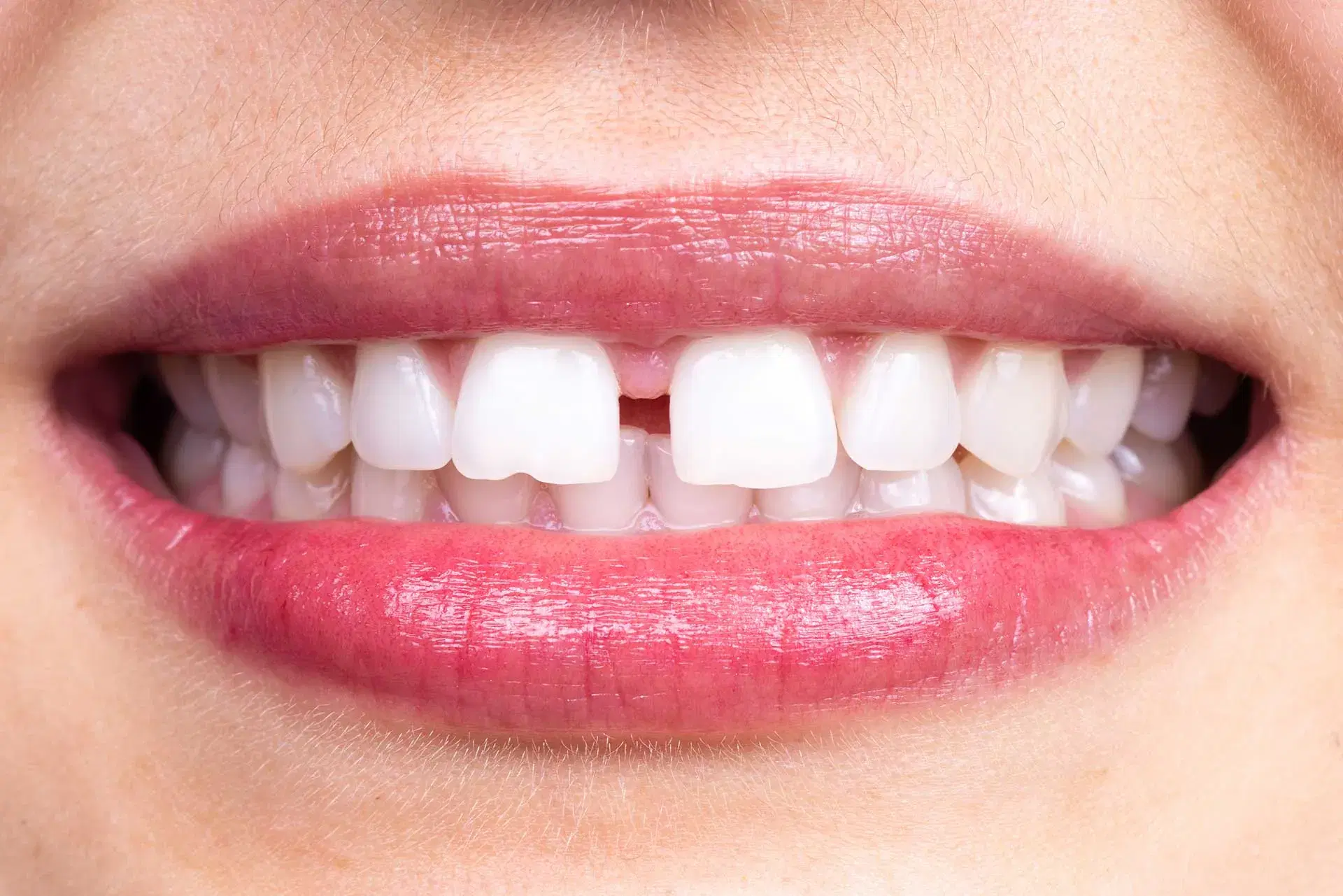
What Is Diastema?
Diastema means a space between two teeth. It can occur anywhere in the mouth, but the most noticeable type is a midline diastema between the two upper front teeth. Because this area is visible when speaking and smiling, many patients seek treatment for aesthetic reasons.
A diastema can be small and barely visible, or wide enough to affect the balance of the smile. It may involve only one space or appear as multiple gaps between several teeth. Some people have generalized spacing across the dental arch, while others have a single gap in the front.
The presence of a diastema does not always mean something is wrong. Some gaps are harmless and only require monitoring. Others may signal an orthodontic, periodontal, developmental, or functional issue that needs treatment.
Why Do Gaps Form Between Teeth?
Gaps form between teeth when there is extra space in the dental arch, pressure that pushes teeth apart, missing tooth structure, or tissue that prevents teeth from coming together properly.
One common reason is a mismatch between tooth size and jaw size. If the teeth are smaller than the available jaw space, gaps may appear. This can be inherited and may affect several family members.
Another reason is tooth shape. Peg-shaped lateral incisors, small front teeth, or naturally narrow teeth can leave spaces even when the bite is otherwise healthy. Missing teeth can also allow nearby teeth to shift, creating new gaps.
In some cases, the cause is functional. Tongue thrusting, thumb sucking, prolonged pacifier use, or certain swallowing patterns can apply pressure to the front teeth and move them apart over time.
Is Diastema Common in Children?
Yes, diastema is common in children and is often part of normal dental development. Many children have spaces between baby teeth or between early permanent teeth. These spaces may close naturally as more permanent teeth erupt, especially when the canine teeth come in.
Parents often worry when they see a gap between a child’s front teeth. In many cases, immediate treatment is not needed. The dentist may simply monitor growth, tooth eruption, jaw development, and oral habits.
However, some childhood diastemas need evaluation. A very large gap, delayed tooth eruption, extra teeth, persistent thumb sucking, tongue thrusting, or an unusual frenulum attachment may require closer attention. Early assessment helps decide whether the child should wait, begin habit correction, or receive orthodontic guidance later.
When Is a Diastema a Problem?
A diastema becomes a problem when it affects function, gum health, speech, bite stability, or patient comfort. It may also become a concern when the person dislikes the appearance of the smile.
Some gaps trap food and make cleaning more difficult. Others may indicate gum disease, especially if the gap appears suddenly in adulthood or continues to widen. If teeth are moving because of bone loss, the problem is more serious than a cosmetic space.
Speech may be affected in some cases, especially when the gap changes airflow during certain sounds. Bite issues may also occur if spacing is part of a broader orthodontic problem.
The decision to treat should be based on both dental health and patient preference. A harmless gap does not have to be closed unless the patient wants it changed.
Can Gum Disease Cause Diastema?
Yes, gum disease can cause gaps between teeth, especially in adults. Periodontal disease can damage the supporting bone and tissues around teeth. As support weakens, teeth may shift, flare forward, loosen, or develop spaces.
This type of diastema should not be treated only with cosmetic bonding or veneers at first. The gum disease must be controlled before closing the spaces. Otherwise, tooth movement may continue, and the treatment may fail.
Warning signs include bleeding gums, bad breath, gum recession, loose teeth, tooth migration, pus, swelling, or a bite that feels different. If a gap appears suddenly or grows over time, periodontal evaluation is important.
Healthy gums provide the foundation for stable cosmetic and orthodontic results.
What Role Does the Frenulum Play?
The labial frenulum is the small band of tissue connecting the inside of the upper lip to the gum above the front teeth. In some people, this tissue attaches low between the front teeth and may contribute to a midline diastema.
A thick or low frenulum does not always need treatment. Many children with a visible frenulum still develop normal spacing as they grow. However, if the frenulum prevents the front teeth from staying together, a dentist or orthodontist may consider a frenectomy.
Frenectomy is a minor procedure that removes or repositions the tissue. It is often planned together with orthodontic treatment rather than used alone. If the teeth are not moved into proper position, removing the tissue may not fully close the gap.
Can Habits Create a Gap?
Yes, certain oral habits can contribute to diastema. Thumb sucking, prolonged pacifier use, tongue thrusting, lip habits, and abnormal swallowing patterns may place pressure on the front teeth. Over time, this pressure can push teeth forward or apart.
In children, habit correction may allow better natural development. In adults, the habit may need to be addressed before or during orthodontic treatment. If the pressure continues after the gap is closed, relapse may occur.
Tongue posture is especially important. Some patients press the tongue against the front teeth during swallowing or at rest. This can affect tooth position and spacing. Myofunctional therapy may be helpful in selected cases when tongue habits are part of the problem.
How Is Diastema Diagnosed?
Diastema is usually diagnosed during a dental examination. The dentist checks the size and location of the gap, tooth shape, bite relationship, gum condition, tooth mobility, and possible causes.
Dental X-rays may be needed to check bone levels, missing teeth, extra teeth, root position, or periodontal disease. In orthodontic cases, photographs, digital scans, and bite analysis may be used to plan tooth movement.
Diagnosis should answer an important question: why is the gap there? Without this answer, treatment may only cover the space temporarily. A complete evaluation helps determine whether the patient needs orthodontics, restorative dentistry, periodontal treatment, frenectomy, or a combination.
What Are the Treatment Options for Diastema?
Diastema treatment depends on the cause and size of the gap. Common options include orthodontic treatment, clear aligners, braces, composite bonding, porcelain veneers, crowns, periodontal therapy, frenectomy, or replacement of missing teeth.
Small cosmetic gaps may be treated with bonding or veneers. Larger spaces caused by tooth position may need orthodontics. Gaps related to gum disease need periodontal care first. Missing teeth may require implants, bridges, or partial dentures depending on the case.
A good treatment plan should protect tooth structure, gum health, bite balance, and long-term stability. Closing the gap quickly is not always the best option if the cause has not been corrected.
Are Braces Good for Diastema?
Braces can be an effective treatment when the gap is caused by tooth position or spacing across the dental arch. Braces move the teeth into better alignment and can close spaces without adding material to the teeth.
This is often the preferred choice when there are multiple gaps, bite problems, rotated teeth, crowding in other areas, or a need to control root position. Orthodontic treatment can create a more stable and balanced result when planned carefully.
The downside is that braces take time. Patients must commit to appointments, cleaning, and wearing retainers after treatment. Retainers are especially important because gaps can reopen if teeth are not held in place.
Can Clear Aligners Close a Diastema?
Clear aligners can close many diastemas, especially mild to moderate gaps caused by tooth position. Aligners are popular because they are removable, discreet, and easier to clean around than braces.
However, aligners are not suitable for every case. Large gaps, complex bite issues, severe rotations, missing teeth, or periodontal instability may require another approach or combined treatment.
Patient compliance matters. Aligners must be worn for the recommended hours each day. If they are worn irregularly, treatment may take longer or fail to achieve the planned result.
After aligner treatment, retainers are needed to prevent the gap from reopening.
Is Composite Bonding a Good Option?
Composite bonding can be a good option for small diastemas, especially when the teeth are slightly narrow or the patient wants a faster cosmetic improvement. The dentist applies tooth-colored resin to widen the teeth and close the space.
Bonding is usually more conservative than veneers because it often requires little or no enamel removal. It can often be completed in one visit and adjusted easily.
However, bonding has limits. It may stain, chip, wear, or need polishing and repair over time. If the gap is large, widening the teeth too much can make them look unnatural. Bonding works best when tooth proportions remain balanced.
Are Porcelain Veneers Used for Diastema?
Porcelain veneers can close gaps while improving tooth shape, color, and symmetry. They may be suitable when the patient wants a broader smile design change, not only gap closure.
Veneers are thin ceramic restorations placed on the front surface of teeth. They can create a natural-looking result when the size and proportions are planned carefully. They are more stain-resistant than composite bonding and may last longer with good care.
The main disadvantage is that veneers often require enamel preparation. This makes the decision more permanent. Veneers should not be used to hide active gum disease, poor bite stability, or a gap caused by ongoing tooth movement.
When Is Frenectomy Needed?
Frenectomy may be needed when a low or thick frenulum contributes to a gap between the upper front teeth or causes the space to reopen after orthodontic closure.
The timing of frenectomy matters. In many cases, orthodontic treatment closes the gap first, and frenectomy is performed at the appropriate stage to support stability. In other cases, the dentist may monitor the frenulum before deciding.
Frenectomy alone may not close a diastema if the teeth are positioned apart. It removes a contributing tissue factor, but tooth movement or restorative treatment may still be needed.
What If the Gap Is Caused by Missing Teeth?
When a gap forms because of a missing tooth, the treatment must replace or manage the missing space. Options may include dental implants, bridges, partial dentures, or orthodontic space closure depending on the situation.
If a tooth has been missing for a long time, nearby teeth may tilt or drift. This can create uneven spaces and bite problems. Orthodontic treatment may be needed before replacement.
Replacing missing teeth is not only cosmetic. It can help chewing function, bite balance, speech, and long-term tooth stability. The best option depends on bone condition, gum health, budget, age, and treatment goals.
Can Diastema Return After Treatment?
Yes, diastema can return if the cause is not controlled or if retention is not used after orthodontic treatment. Teeth naturally tend to shift over time, and spaces may reopen without retainers.
Relapse is more likely when tongue thrusting, thumb habits, periodontal disease, missing teeth, or frenulum tension remain untreated. This is why long-term planning matters.
Retainers, night guards, periodontal maintenance, habit correction, and regular dental visits may all help keep the result stable. A good dentist explains maintenance before treatment begins, not after the gap closes.
How Long Does Diastema Treatment Take?
Treatment time depends on the method. Composite bonding may close a small gap in one appointment. Veneers may require several visits. Clear aligners or braces may take months or longer depending on the size of the gap and bite complexity.
Periodontal treatment must be completed before cosmetic closure if gum disease is present. Frenectomy healing may also need time before final restorative or orthodontic steps are completed.
Patients should avoid choosing treatment only by speed. The fastest option is not always the healthiest or most stable. The right approach should match the cause of the diastema.
Is Diastema Treatment Painful?
Most diastema treatments are manageable. Bonding and veneers usually involve minimal discomfort. Orthodontic treatment may cause pressure or soreness after adjustments or aligner changes. Frenectomy may cause temporary tenderness during healing.
Periodontal treatment may involve local anesthesia if deep cleaning or surgery is needed. The level of discomfort depends on the procedure and the patient’s sensitivity.
A dentist should explain what to expect before treatment. Good preparation reduces anxiety and helps patients follow aftercare instructions properly.
How Should Patients Choose the Right Treatment?
The right treatment should be chosen after diagnosis, not only based on appearance. Patients should ask whether the gap is caused by tooth size, tooth position, gum disease, missing teeth, habits, or frenulum attachment.
A small space between healthy teeth may respond well to bonding. A larger orthodontic space may need aligners or braces. A gap caused by periodontal disease needs gum treatment first. A missing tooth may require replacement.
The best result is one that looks natural, protects tooth structure, supports gum health, and remains stable over time.
What Questions Should You Ask Your Dentist?
Patients should ask clear questions before closing a diastema. What caused my gap? Is my gum health stable? Do I need X-rays? Is orthodontic treatment better than bonding? Will veneers make my teeth look too wide? Do I need a frenectomy? Will I need retainers? Can the gap reopen? What maintenance will be required?
The quality of the answers matters. A good dentist should explain the reason behind each option and show the benefits and limitations clearly.
Patients should feel informed before choosing treatment. Cosmetic improvement should not come at the expense of long-term dental health.
Can Diastema Be Prevented?
Not every diastema can be prevented because genetics, tooth size, and jaw size play a major role. However, some risk factors can be managed.
In children, stopping thumb sucking or prolonged pacifier habits may reduce pressure on the front teeth. In adults, treating gum disease early can help prevent tooth movement. Replacing missing teeth on time may reduce drifting. Wearing retainers after orthodontic treatment helps prevent spaces from reopening.
Regular dental checkups allow early detection of changes. A small gap that suddenly appears or widens should be evaluated before it becomes more difficult to treat.