
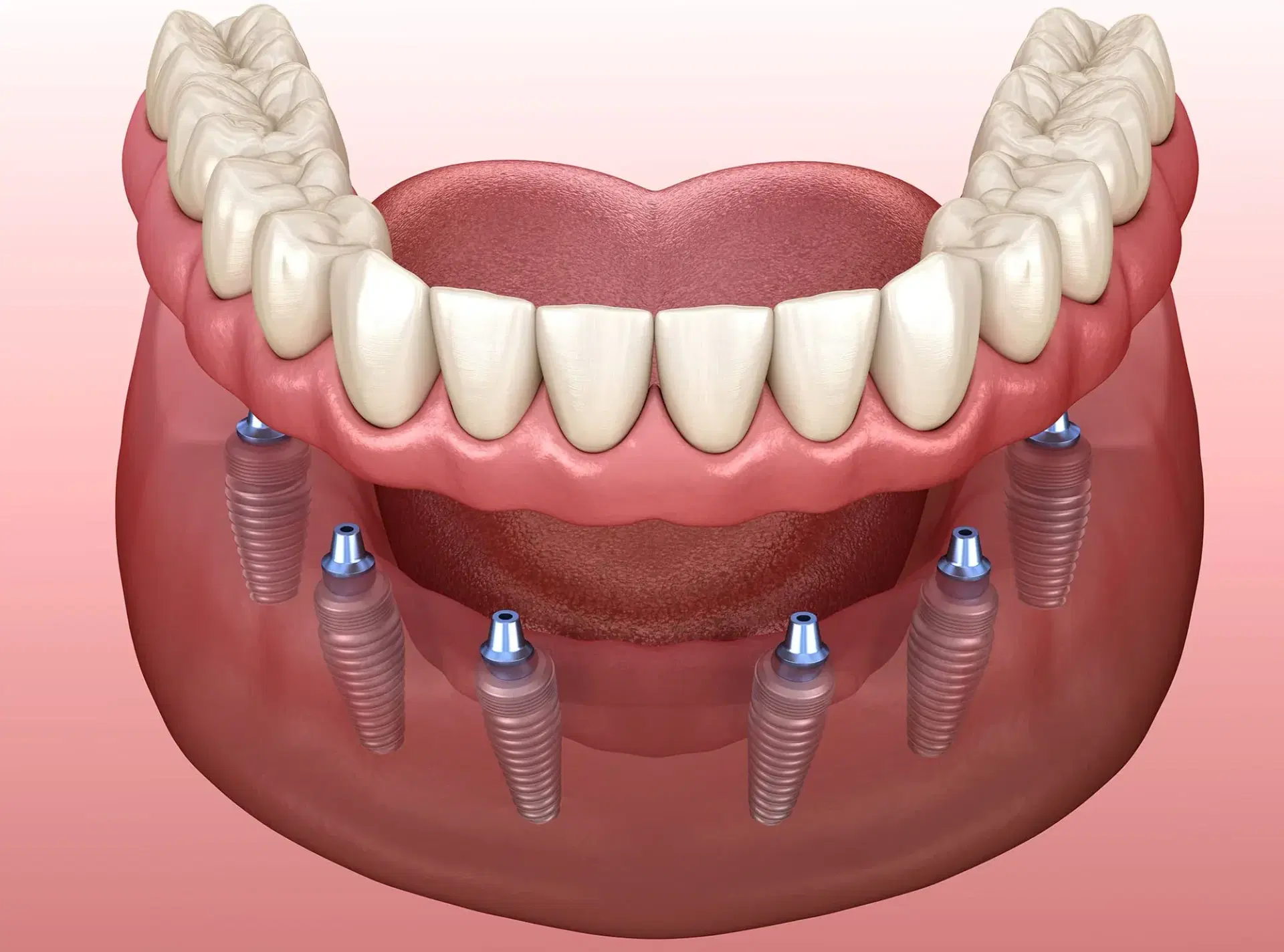
Implant supported dentures offer a secure and comfortable solution for replacing an entire row of missing teeth.
Traditional dentures rest directly on the gums. Therefore, they may shift during eating, speaking, or laughing.
Dental implants provide implant supported dentures with greater stability. The implants act as strong anchors inside the jawbone.
This extra support can improve comfort, chewing ability, and confidence. It may also reduce concerns about loose dentures.
However, treatment involves surgery, healing, and ongoing maintenance. Every patient also requires a personalized clinical assessment.
Understanding the available options can help you prepare for your consultation. It can also support realistic treatment expectations.
What Are Implant Supported Dentures?
Implant supported dentures replace several missing teeth or a complete dental arch. Dental implants hold the restoration in position.
A dental implant usually resembles a small screw. The dentist places it carefully within the jawbone.
The surrounding bone gradually bonds with the implant surface. This healing process creates a stable foundation.
After healing, special attachments connect the implants with the denture. The connection reduces unwanted movement during daily activities.
Some restorations remain removable. You can take them out for cleaning and overnight care.
Other restorations stay fixed within the mouth. Only a dental professional can remove these restorations safely.
The best design depends on your bone structure, oral health, budget, and personal preferences.
How Do Implant Supported Dentures Work?
Dental implants transfer chewing pressure into the jawbone. Traditional dentures mainly transfer pressure onto the gums.
This difference explains the improved stability. Implants help prevent the denture from sliding across sensitive gum tissue.
The dentist places implants at carefully selected positions. These positions must support balanced pressure across the dental arch.
After healing, connectors join the denture to the implants. Different systems provide different levels of retention.
Some dentures snap onto individual attachments. Others connect to a bar that links several implants together.
Fixed restorations use screws to secure the teeth. The screws remain hidden beneath small access openings.
Each system requires accurate planning. Poor implant positioning may affect comfort, appearance, cleaning, and long-term function.
Types of Implant Supported Dentures
Patients can choose between several restoration designs. Each option provides different benefits, costs, and maintenance requirements.
The main categories include removable overdentures and fixed full-arch restorations.
Your dentist should explain each design before treatment. The discussion should include comfort, cleaning, repairs, and future maintenance.
Removable Implant Overdentures
A removable overdenture attaches to dental implants through clips, buttons, or other connectors.
The denture stays secure during daily use. However, you can remove it for cleaning.
This design often uses fewer implants than a fixed restoration. The exact number depends on individual anatomy.
Removable overdentures may replace lost teeth and gum tissue. Their acrylic base can support the lips and facial profile.
The attachments may wear over time. Your dentist can replace these small components during maintenance appointments.
Bar-Retained Overdentures
A bar-retained denture connects to a metal bar. The implants support that bar across the dental arch.
Clips inside the denture grip the bar. This connection provides strong retention and balanced support.
The bar may reduce movement more effectively than individual attachments. However, it requires careful daily cleaning.
Food and plaque can collect beneath the bar. Special brushes may help you reach these areas.
The design needs adequate space within the mouth. Your dentist must evaluate your bite and available restoration height.
Fixed Full-Arch Implant Dentures
A fixed full-arch restoration remains attached to the implants. A dental professional removes it during certain maintenance procedures.
Many patients describe this option as feeling closer to natural teeth. It usually offers excellent stability during chewing.
The restoration may contain acrylic, composite, ceramic, or zirconia materials. Each material has distinct advantages and limitations.
Fixed teeth still require detailed cleaning underneath. They do not remove the need for daily oral hygiene.
Repairs may also cost more than removable denture repairs. Material selection can strongly affect the final price.
Implant Supported Dentures Versus Traditional Dentures
Traditional dentures use suction, muscle control, and adhesive for stability. Their performance can vary throughout the day.
Lower dentures often move more than upper dentures. The tongue and limited gum surface can reduce lower denture retention.
Implants create direct anchor points. Therefore, implant dentures usually move less during speaking and chewing.
Traditional dentures may rub against the gums. Repeated movement can create sore areas or irritation.
Implant support can reduce this movement. However, the denture may still contact certain gum areas.
Traditional dentures usually cost less initially. They also avoid implant surgery and its healing period.
Implant treatment requires a larger investment. However, many patients value the improved stability and confidence.
Neither option suits every patient. Your health, anatomy, expectations, and budget should guide the final decision.
Benefits of Implant Supported Dentures
Greater stability represents the main advantage. The restoration remains more secure during normal daily activities.
This stability may improve speech. Loose dentures can sometimes create clicking sounds or affect pronunciation.
Implant support can also improve chewing efficiency. You may handle a wider variety of foods comfortably.
A secure denture often increases social confidence. You may feel less concerned during conversations or meals.
Implants also transfer pressure into the jawbone. This stimulation may help preserve bone around the implant sites.
However, implants cannot stop every natural bone change. The jaw may continue changing in areas without implant support.
The restoration can also improve facial support. Replacing missing teeth and gum volume may support the lips.
Many patients need less denture adhesive. Some removable designs may not require adhesive at all.
Possible Disadvantages and Risks
Implant supported dentures require oral surgery. Surgery can cause temporary swelling, discomfort, bruising, or bleeding.
The implants also need time to integrate with the bone. This process can extend the overall treatment timeline.
Some implants may fail to integrate. Infection, smoking, uncontrolled health conditions, or excessive pressure may contribute.
Inflammation can develop around implants. Without treatment, this condition may damage the supporting gum and bone.
Restoration components can also wear or break. Clips, screws, acrylic teeth, and other parts may require replacement.
Cleaning takes commitment. Fixed restorations can require additional tools and more detailed techniques.
Treatment costs often exceed traditional denture costs. Bone grafting or sedation can increase the total amount.
No dental treatment offers permanent guarantees. Regular professional care remains essential after implant placement.
Who May Qualify for Implant Dentures?
Many adults with extensive tooth loss may qualify. However, the dentist must evaluate several health factors.
You need enough healthy bone to support the implants. Bone quantity and density can vary across the jaw.
Bone grafting may improve certain deficient areas. However, grafting adds treatment stages, costs, and healing time.
Healthy gums create a better environment for implants. Active gum disease usually requires treatment before implant surgery.
Your general health also affects healing. The dentist should review medical conditions and current medications carefully.
Controlled diabetes may not automatically prevent treatment. However, poor control can increase healing concerns.
Smoking can raise complication risks. Your dentist may recommend stopping before surgery and throughout healing.
Teeth grinding can overload the restoration. A protective appliance may help manage heavy nighttime pressure.
Good candidates also follow cleaning instructions consistently. Long-term success depends strongly on daily maintenance.
The Consultation and Planning Process
Your first appointment should include a detailed discussion. The dentist will review your dental history and treatment goals.
A clinical examination will assess your gums, remaining teeth, bite, and available space.
Dental X-rays provide information about bone levels. Three-dimensional imaging may reveal important anatomical structures.
The dentist will also examine your smile and facial proportions. These details influence tooth size, position, and color.
Digital scans or impressions record the shape of your mouth. The dental laboratory uses these records during restoration design.
Your treatment plan should explain every stage clearly. It should also identify alternative treatment options.
Ask about temporary teeth, healing periods, materials, maintenance, and possible additional procedures.
A written estimate should include each expected charge. This approach can reduce unexpected costs later.
The Implant Placement Procedure
The dentist begins by numbing the treatment area. Sedation may provide additional comfort during longer procedures.
The clinician then prepares precise spaces within the jawbone. Each implant enters a planned position.
Some patients receive implants after tooth extraction. Others require a separate healing period after extractions.
The dentist may add bone grafting material during surgery. Grafting can strengthen deficient areas or fill extraction spaces.
After placement, the gums may cover the implants. Alternatively, small healing components may remain visible.
Temporary dentures can protect appearance during healing. Your dentist may adjust them to avoid excessive implant pressure.
The surgical appointment may involve several implants. Procedure length depends on complexity and additional treatment needs.
Healing and Osseointegration
Osseointegration describes the connection between living bone and the implant surface. This process creates long-term implant stability.
Healing often requires several months. Individual health, implant location, and bone quality influence the timeline.
You may wear temporary teeth during this period. These teeth must avoid excessive pressure on healing implants.
Your dentist will schedule follow-up appointments. These visits allow the team to inspect the gums and monitor progress.
Early discomfort usually improves gradually. Increasing pain or swelling requires prompt professional attention.
Smoking can interfere with blood flow and healing. Avoiding tobacco may improve the treatment environment.
You should follow every eating and cleaning instruction. Careful behavior helps protect the implants during integration.
Receiving the Final Denture
The restorative stage begins after the implants achieve suitable stability. The dentist may take new scans or impressions.
These records help create the final denture. The laboratory designs the tooth arrangement and supporting structure.
You may attend several trial appointments. These visits help assess appearance, speech, comfort, and bite alignment.
The dentist can adjust tooth shape and color. These changes help create a balanced and natural result.
Removable dentures receive their attachment components. Fixed restorations connect directly to the implant framework.
The dentist checks pressure across the bite. Uneven pressure can damage components or overload individual implants.
You should receive detailed maintenance instructions before leaving. Keep those instructions available during the adjustment period.
Eating With Implant Supported Dentures
Implant support can improve chewing confidence. However, new restorations still require an adjustment period.
Begin with soft foods after surgery. Choose foods that require limited chewing during early recovery.
Your dentist will explain when firmer foods become appropriate. Do not rush this stage.
Cut food into smaller pieces initially. Try to distribute chewing pressure across both sides.
Avoid very hard foods during healing. Ice, hard sweets, and nutshells may damage temporary restorations.
Sticky foods can pull against removable dentures. They may also collect around attachment components.
After healing, many patients enjoy a broader diet. However, sensible choices still protect the restoration.
Cleaning Removable Implant Dentures
Remove the denture according to your dentist’s instructions. Handle it over a soft towel or water-filled basin.
Brush every surface with a suitable denture brush. Avoid highly abrasive products that may scratch the material.
Clean around each implant attachment carefully. Plaque can collect where the attachment meets the gum.
Interdental brushes may help reach narrow spaces. Your dental team should recommend the correct size.
Clean your tongue and gum tissues gently. This routine can reduce bacteria and support oral comfort.
Soak the denture only in approved solutions. Certain chemicals can damage metal or attachment components.
Never use hot water for cleaning. Heat can distort some denture materials and affect the fit.
Cleaning Fixed Implant Dentures
Fixed teeth remain inside the mouth. However, plaque and food can collect beneath the restoration.
A soft toothbrush can clean the visible surfaces. Focus carefully near the gum line.
Special floss can pass beneath the bridge. Threaders may help guide floss through difficult areas.
Interdental brushes can clean larger spaces. Water flossers may provide additional support for some patients.
Your dental professional should demonstrate each technique. Incorrect tools may damage the gums or restoration surfaces.
Professional cleaning remains necessary. The team can remove deposits that daily cleaning may miss.
Consistent home care protects the gums and bone. It can also reduce unpleasant odors beneath the restoration.
How Long Do Implant Dentures Last?
Dental implants can function for many years. However, their lifespan depends on health, hygiene, and biting forces.
The denture restoration may need repairs before the implants. Different materials wear at different rates.
Acrylic teeth can gradually wear or chip. Clips and attachment inserts may lose retention over time.
Screws can loosen under repeated pressure. Your dentist can often replace or tighten these components.
Regular examinations help detect early problems. Small repairs may prevent larger and more expensive complications.
Implants cannot develop tooth decay. However, harmful inflammation can affect their surrounding tissues.
Your maintenance habits strongly influence long-term performance. Daily cleaning should continue throughout the restoration’s lifespan.
Implant Supported Denture Costs
Treatment costs vary widely between patients. The final price depends on anatomy, design, materials, and clinical complexity.
The number of implants affects the cost. Bone grafting can also increase the total fee.
Fixed restorations often cost more than removable overdentures. They usually require more implants and complex laboratory work.
Premium materials can raise the price. However, material choice should reflect function rather than appearance alone.
Sedation, extractions, imaging, and temporary teeth may create additional charges.
Ask for a detailed written estimate. Confirm whether the estimate includes the final restoration and future maintenance.
Insurance coverage varies between policies. Review exclusions, limits, and waiting periods before treatment.
Low prices should not replace careful evaluation. Experience, planning, materials, and aftercare all influence treatment value.
Frequently Asked Questions
Are Implant Supported Dentures Removable?
Some implant dentures remain removable. You can take them out for cleaning and overnight storage.
Fixed full-arch restorations stay inside the mouth. Only a dental professional should remove them.
Your preferred design will depend on anatomy, budget, and cleaning ability.
How Many Implants Support a Denture?
The required number varies by jaw, bone quality, and restoration design.
A removable lower overdenture may use fewer implants. Fixed restorations generally require broader implant support.
Your dentist should determine the number after detailed imaging and examination.
Do Implant Dentures Feel Like Natural Teeth?
Implant dentures usually feel more secure than traditional dentures. Fixed restorations may feel particularly stable.
However, they cannot reproduce every sensation from natural teeth. Adaptation may take several weeks.
Good design and bite adjustment can improve comfort significantly.
Is Implant Denture Surgery Painful?
Local anesthesia controls pain during surgery. You may notice pressure or vibration during the procedure.
Temporary soreness and swelling may develop afterward. Recommended medication usually manages these symptoms.
Severe or increasing pain requires professional assessment.
Can Implant Dentures Be Placed in One Day?
Some patients receive temporary fixed teeth on the surgery day. This approach requires suitable bone and implant stability.
The temporary restoration still needs careful protection. The permanent denture usually follows after healing.
Same-day treatment does not suit every patient.
Can Food Get Under Implant Dentures?
Food can collect beneath removable and fixed restorations. The amount depends on design, fit, and gum shape.
Daily cleaning removes trapped debris. Your dental team can recommend suitable cleaning tools.
Persistent food collection may require a professional adjustment.
Do Implant Dentures Prevent Bone Loss?
Implants stimulate bone around their placement sites. This support may reduce bone loss within those areas.
However, they cannot preserve every part of the jaw equally. Natural changes can continue elsewhere.
Regular examinations help monitor bone health.
How Often Do Implant Dentures Need Professional Cleaning?
Most patients need regular maintenance appointments. The ideal schedule depends on gum health and cleaning ability.
Some patients require more frequent care. Your dentist should create a personalized maintenance plan.
Skipping appointments can allow inflammation to progress unnoticed.
Can Older Adults Receive Implant Supported Dentures?
Age alone does not determine eligibility. General health, bone condition, and healing ability matter more.
Many older adults can receive implant treatment successfully. A thorough medical review remains important.
The dentist should consider medications and existing health conditions.
Are Implant Supported Dentures Worth the Cost?
Many patients value their improved stability, comfort, and chewing ability. However, individual priorities vary.
The treatment requires surgery, maintenance, and a significant financial commitment.
A detailed consultation can help you compare the benefits with other suitable options.