
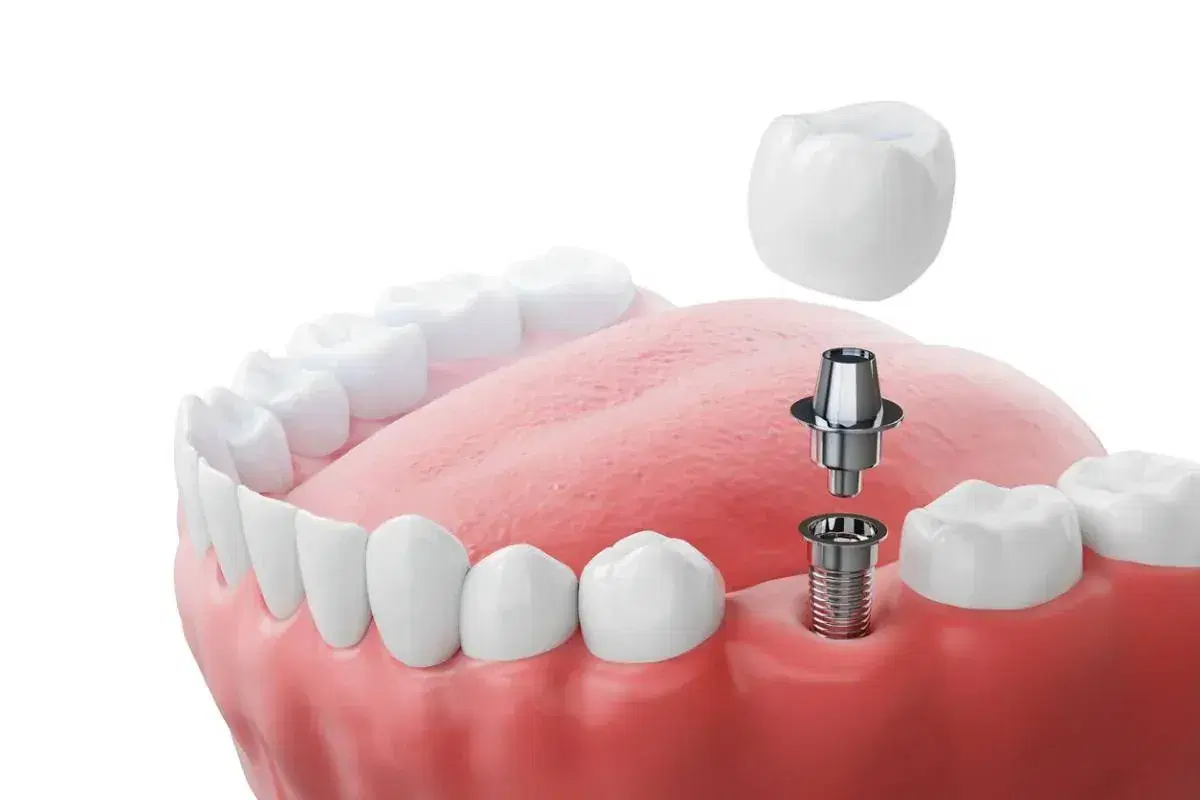
Screwless dental implants use a friction-based connection instead of a traditional abutment screw.
These systems usually rely on a locking taper between the implant and the visible restoration.
Despite the name, the implant body may still have threads inside the jawbone.
The word “screwless” normally describes the connection above the bone, not the implant’s outer shape.
For suitable cases, screwless dental implants may reduce screw-related complications and support a clean restoration design.
However, they are not automatically better than conventional implants.
Successful treatment still requires healthy tissues, accurate planning, skilled placement, and consistent maintenance.
Understanding the design can help you compare available implant systems more confidently.
What Are Screwless Dental Implants?
A dental implant usually contains several separate components.
The implant body sits inside the jawbone and replaces the missing tooth root.
An abutment connects the implant body with the crown, bridge, or denture.
Many conventional systems use a small screw to secure the abutment.
A screwless system replaces that screw connection with carefully engineered friction.
The abutment fits tightly inside the implant through a tapered internal connection.
This design may also appear under names like locking taper or friction-fit connection.
The exact terminology can vary between implant manufacturers and dental clinics.
Some clinics also describe cement-free crowns as screwless restorations.
Therefore, you should ask which component actually avoids a screw.
A detailed explanation prevents confusion before treatment begins.
How Does a Locking-Taper Connection Work?
A locking-taper connection uses two precisely shaped surfaces.
One surface sits inside the implant, while the other belongs to the abutment.
The dentist places the abutment into the implant using controlled pressure.
The tapered surfaces create friction and hold the components together.
This mechanical connection can remain stable without a traditional retaining screw.
Daily chewing forces may strengthen the connection in certain designs.
However, every system has specific placement and removal instructions.
The dentist must use instruments designed for that implant brand.
Small differences in angle or component shape can affect the final fit.
Therefore, implant parts from different systems should not be mixed casually.
Accurate seating remains essential for stability, appearance, and long-term function.
Are Screwless Implants Truly Free From Screws?
The term “screwless” can create an inaccurate impression.
Most dental implant bodies still resemble threaded posts.
The dentist rotates these implants into a prepared space within the jawbone.
The screwless feature usually applies to the implant-abutment connection.
Some restorations may also avoid visible screw-access openings through the crown.
However, another component could still use cement or a separate retaining mechanism.
Fixed bridges may use different connection methods across the same treatment plan.
You should request a clear diagram during your consultation.
The diagram should show the implant, abutment, crown, and connecting mechanism.
This information helps you understand future maintenance and repair requirements.
Benefits of Screwless Dental Implants
Screwless connections remove the abutment screw from certain implant designs.
Therefore, they avoid problems involving screw loosening or screw fracture.
A loose screw can create movement, discomfort, or changes in the bite.
Removing this component may simplify the internal connection.
The restoration may also avoid a visible screw-access channel.
This advantage can support a natural appearance, particularly around front teeth.
The dentist gains greater freedom when designing the biting surface.
A screw channel cannot interfere with the crown’s visible shape.
Locking-taper connections may also create a close mechanical fit.
A close fit can reduce movement between the implant and abutment.
However, no connection can guarantee complete protection from bacteria or inflammation.
Regular cleaning remains necessary around every dental implant.
Possible Limitations and Disadvantages
Screwless dental implants are not available through every clinic.
Dentists require suitable training, instruments, and replacement components.
A friction-fit abutment may become difficult to remove after long-term use.
Removal could require special tools or additional treatment time.
This challenge may complicate crown repairs or abutment replacement.
Incorrect seating can also affect stability.
The connection requires careful cleaning before the dentist places the abutment.
Debris or moisture may interfere with proper contact between both surfaces.
Some designs have fewer restorative choices than widely used screw-retained systems.
Replacement parts may also depend on one manufacturer.
This dependency can become important after many years.
Patients should ask how the clinic manages discontinued or unavailable components.
Screwless Versus Screw-Retained Implants
Screw-retained systems use a screw to connect the abutment or restoration.
Dentists have used this approach successfully for many years.
The restoration often remains retrievable through a small access opening.
A dentist can remove the screw when repairs become necessary.
However, screws may loosen, wear, or fracture under repeated pressure.
Poor bite balance can increase these mechanical stresses.
Screw-access openings may also affect appearance in visible areas.
The dentist usually fills the opening with tooth-coloured material.
Screwless systems avoid this access opening in many cases.
They also remove some screw-related maintenance concerns.
However, they may prove harder to retrieve when components require replacement.
Neither system provides the best answer for every patient.
Screwless Versus Cement-Retained Restorations
Cement-retained crowns attach to an abutment using dental cement.
This approach can produce a clean appearance without a screw-access opening.
However, excess cement may remain beneath the gum line.
Hidden cement can irritate tissues and encourage inflammation around an implant.
Careful cement removal reduces this concern.
Screwless locking-taper systems may avoid both retaining screws and crown cement.
Some designs join the crown and abutment before placement.
The complete restoration then connects through mechanical friction.
However, not every screwless implant follows this method.
Some systems still use cement between the crown and abutment.
Ask your dentist whether the planned restoration contains dental cement.
The answer may influence cleaning, repair, and maintenance decisions.
Who May Qualify for Screwless Dental Implants?
Many patients suitable for standard implants may also qualify for screwless systems.
You need enough healthy bone to support the implant body.
The gums should remain free from uncontrolled infection.
Active gum disease usually requires treatment before implant surgery.
Your general health also influences healing.
Certain medical conditions can affect bone repair, bleeding, or infection risk.
Controlled conditions may not prevent implant treatment.
However, your dentist needs an accurate medical history.
Smoking can increase healing concerns and long-term complications.
Heavy teeth grinding may place excessive force on the restoration.
A protective night guard could help manage these forces.
The final decision depends on anatomy, tooth position, and restoration requirements.
When Might Another Implant System Work Better?
A screwless connection may not suit every restoration.
Complex full-arch bridges could require a more retrievable design.
The dentist may prefer screws when future removal seems likely.
Limited space can also influence the selected connection.
Certain implant positions may restrict the available abutment choices.
Clinicians often select systems they know well and maintain confidently.
This experience can matter more than one advertised design feature.
A reliable conventional implant may outperform a poorly planned screwless implant.
Long-term access to parts should also influence the decision.
A widely supported system may simplify repairs after relocation.
You should consider the complete treatment plan, not only the connection type.
The Consultation and Planning Process
The first appointment usually begins with a dental and medical review.
Your dentist examines the missing tooth area and surrounding gums.
Dental X-rays reveal bone height and nearby tooth roots.
Three-dimensional imaging may show bone width, nerves, and sinus spaces.
Digital scans can record the shape of your teeth and bite.
The dentist then plans the implant’s position, angle, and depth.
This stage also determines the future crown shape.
Accurate planning helps distribute chewing forces safely.
Your treatment discussion should explain the selected implant connection.
It should also cover alternatives, risks, costs, and expected maintenance.
Ask which company manufactures the implant and restoration components.
Keep this information with your dental records for future care.
How the Implant Procedure Works
The dentist begins by numbing the treatment area.
Sedation may provide additional support during longer or more complex procedures.
The clinician prepares a precise channel within the jawbone.
The implant body then enters this planned position.
A temporary healing component may protect the implant during recovery.
The gum can also cover the implant completely in some cases.
Bone gradually forms a stable connection around the implant surface.
This healing process usually takes several months.
After healing, the dentist exposes the implant when necessary.
The locking-taper abutment then enters the internal connection.
Controlled pressure secures the friction-based fit.
Finally, the dentist places or completes the visible crown.
Can You Receive a Tooth Immediately?
Some patients receive a temporary tooth on the implant placement day.
This approach requires strong initial implant stability.
The surrounding bone must support the implant without harmful movement.
The temporary crown should avoid heavy biting pressure during healing.
Patients must follow dietary restrictions carefully.
Immediate restoration does not mean the implant has fully healed.
Bone integration still continues beneath the gum.
Other patients receive a removable temporary tooth.
Some sites may remain without a visible tooth during early healing.
The safest choice depends on bone quality, implant position, and bite forces.
Your dentist should explain the temporary restoration before surgery.
Recovery After Implant Placement
Mild swelling, soreness, and bruising can follow implant surgery.
These symptoms usually improve gradually during early recovery.
Your dentist may recommend suitable pain relief.
You should follow medication instructions carefully.
Soft foods can protect the surgical area.
Avoid chewing directly on the implant site during early healing.
Very hard foods may damage a temporary crown.
Smoking can interfere with blood flow and tissue repair.
Good oral hygiene supports healthy healing.
However, aggressive brushing may irritate fresh surgical tissues.
Your dental team should demonstrate safe cleaning techniques.
Attend every scheduled follow-up appointment.
These visits allow early identification of healing problems.
Warning Signs Requiring Dental Attention
Increasing pain after initial improvement may indicate a complication.
Persistent swelling, fever, or unpleasant drainage requires professional assessment.
Ongoing bleeding also deserves attention.
A temporary crown should not feel mobile.
Movement could place pressure on the healing implant.
Contact your dentist when the bite suddenly feels different.
Numbness lasting longer than expected also requires evaluation.
Do not attempt to remove or adjust implant components at home.
Household adhesives can damage tissues and complicate professional repairs.
Early communication often prevents minor issues from becoming serious problems.
Cleaning Screwless Dental Implants
Screwless connections still require daily cleaning.
The missing abutment screw does not prevent plaque accumulation.
Brush the crown and gum line with a soft toothbrush.
Interdental brushes may clean spaces beside the implant crown.
Special floss can reach beneath bridges or larger restorations.
A water flosser may provide additional support for some patients.
Your dental hygienist should recommend suitable tools.
Using an oversized brush may irritate the gums.
Using an undersized brush may leave plaque behind.
Professional cleaning remains important.
The dental team can monitor gum health and surrounding bone levels.
Consistent maintenance protects the entire restoration.
How Long Can Screwless Implants Last?
Dental implants can function for many years with appropriate care.
However, no implant system carries a lifetime guarantee.
The implant body and visible crown have different maintenance needs.
Crowns may chip, wear, or require replacement.
Abutments can also experience mechanical complications.
Healthy gums and stable bone support long-term performance.
Smoking, poor cleaning, and uncontrolled gum disease increase risks.
Teeth grinding may damage the crown or connection.
Regular bite checks can identify excessive pressure early.
The selected implant brand also matters.
Available replacement components can simplify future repairs.
Long-term success depends on planning, placement, hygiene, and professional monitoring.
Cost of Screwless Dental Implants
Screwless dental implant costs vary between clinics and treatment plans.
The total price may include imaging, surgery, components, and the final crown.
Tooth extraction can create an additional charge.
Bone grafting may also increase the cost.
Sedation and temporary teeth can affect the final amount.
Specialized components may cost more than standard implant parts.
However, the connection type represents only one pricing factor.
Clinician experience and laboratory quality also influence treatment fees.
Request a detailed written estimate before starting treatment.
Confirm whether the price includes follow-up appointments and the permanent crown.
Insurance coverage varies between policies.
Review exclusions, annual limits, and waiting periods carefully.
Choosing the Right Dental Professional
Implant training and clinical experience should guide your decision.
Ask how often the dentist uses the proposed screwless system.
The clinician should explain both benefits and limitations openly.
Be cautious when a clinic promises guaranteed results.
Every surgical treatment involves biological and mechanical risks.
Ask to see similar treatment examples.
However, remember that another patient’s result cannot predict yours.
The clinic should also provide emergency and maintenance support.
Clear written instructions indicate organized aftercare.
A second opinion may help with complex or expensive treatment.
Choose a plan that prioritizes health, function, and future maintenance.
Frequently Asked Questions
Do Screwless Dental Implants Contain Any Screws?
The implant body usually has external threads inside the jawbone.
The screwless description commonly refers to the abutment connection.
Some restorations may still contain other threaded components.
Ask your dentist for the exact system design.
Are Screwless Dental Implants Better?
Screwless implants offer useful advantages in selected cases.
However, they are not universally better than screw-retained systems.
The best choice depends on anatomy, restoration design, and maintenance needs.
Clinical experience also influences the result.
Can a Screwless Implant Become Loose?
Any implant restoration can develop movement.
A poorly seated abutment may lose stability.
Bone loss or implant failure can also create looseness.
Contact your dentist immediately when movement appears.
Are Screwless Implants Painful?
Local anaesthesia controls discomfort during implant placement.
You may experience mild soreness after surgery.
Most patients manage early discomfort with recommended pain relief.
Increasing pain requires professional assessment.
Can Dentists Remove Screwless Implant Crowns?
Dentists can remove many screwless restorations using special instruments.
However, removal may prove harder than opening a screw-retained crown.
The process depends on the connection design.
Only trained professionals should attempt removal.
Do Screwless Implants Need Dental Cement?
Some screwless systems avoid cement completely.
Others use cement between the crown and abutment.
The locking connection itself usually relies on friction.
Your dentist should explain every bonding method within the restoration.
Can Screwless Implants Replace Several Teeth?
Screwless systems may support single crowns, bridges, or larger restorations.
However, treatment options vary between manufacturers.
Complex bridges may require different connection designs.
Detailed planning determines the safest approach.
How Soon Can You Eat After Surgery?
You can usually eat soft foods after the numbness fades.
Avoid chewing directly on the surgical site.
Your dentist will explain when firmer foods become safe.
Follow those instructions throughout the healing period.
How Often Do Screwless Implants Need Check-Ups?
Most patients require regular dental examinations and professional cleaning.
The ideal schedule depends on gum health and personal risk factors.
Patients with previous gum disease may need more frequent appointments.
Your dentist should create an individual maintenance schedule.
Are Screwless Dental Implants Worth the Cost?
They may offer strong stability and fewer screw-related concerns.
However, value depends on proper case selection and long-term component access.
Compare complete treatment plans rather than marketing terms.
Reliable aftercare should form part of the decision.