
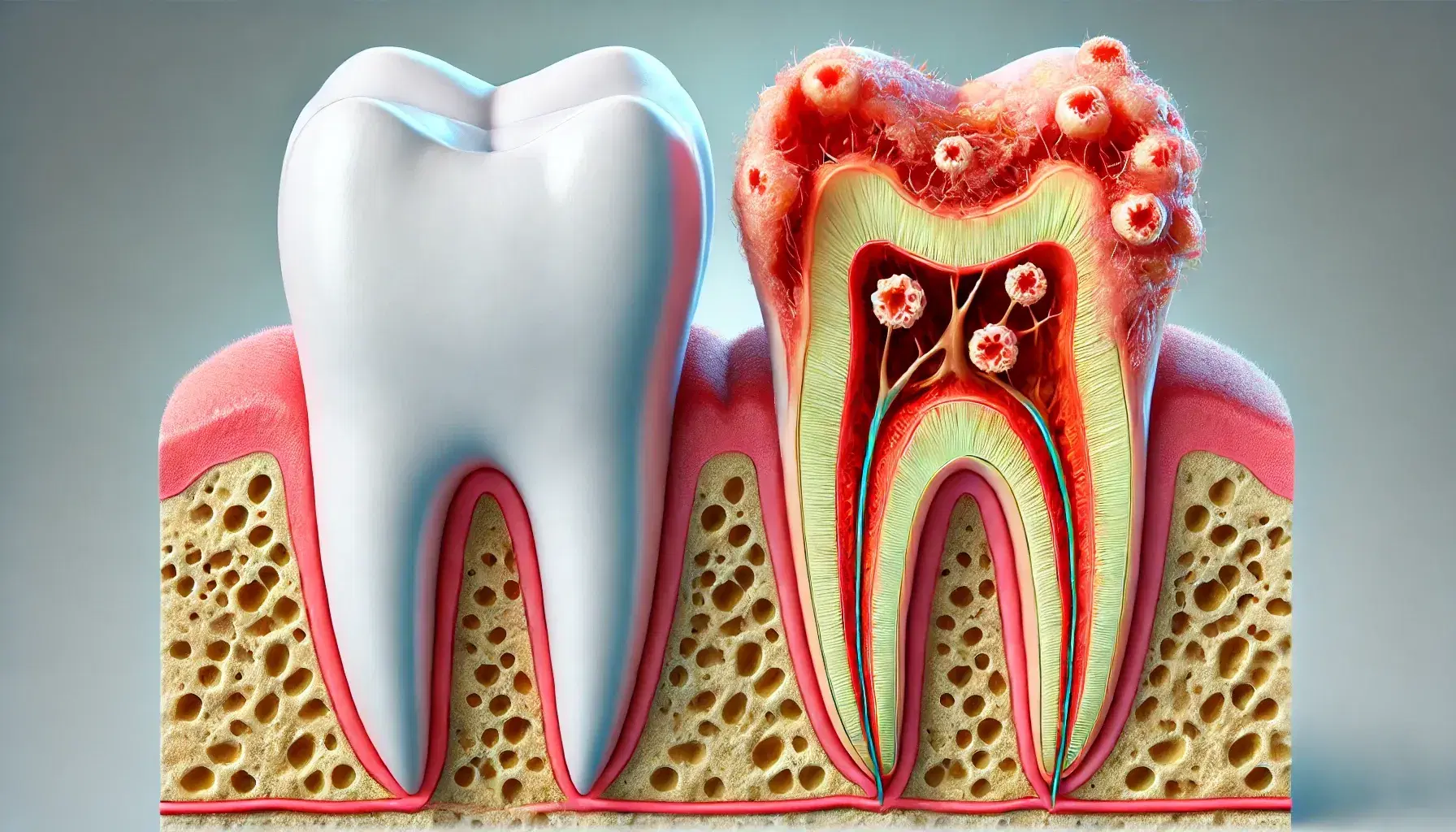
What Is a Tooth Abscess?
A tooth abscess is a localized bacterial infection that creates pus around a tooth or gum area. Pus contains bacteria, dead cells, immune cells, and inflammatory fluid. As pressure builds, the area may become painful, swollen, warm, or tender.
There are different types of dental abscesses. A periapical abscess forms at the tip of the tooth root, usually after bacteria enter the pulp through deep decay, cracks, or trauma. A periodontal abscess forms in the gum and supporting tissues, often related to gum disease or deep periodontal pockets. A gingival abscess may affect the gum tissue without deeper tooth root involvement.
The exact type matters because treatment changes depending on the source. A root infection may need root canal treatment or extraction. A gum-related abscess may need periodontal drainage and gum disease management.
Why Does a Tooth Abscess Form?
A tooth abscess forms when bacteria reach an area where the body cannot clear the infection easily. The most common pathway is untreated tooth decay. When a cavity becomes deep enough, bacteria enter the pulp chamber, where nerves and blood vessels are located. The pulp becomes inflamed and may die, allowing infection to spread through the root tip.
Cracked teeth can also allow bacteria to enter. Even a small fracture may create a pathway toward the pulp. Trauma can damage the nerve inside the tooth even if the tooth does not break visibly. Over time, a dead or infected pulp may lead to an abscess.
Gum disease is another major cause. Deep pockets around teeth can trap bacteria below the gumline. If drainage becomes blocked, pus may collect and form a periodontal abscess.
What Are the Main Symptoms?
The main symptom of a tooth abscess is often severe tooth pain. The pain may feel throbbing, sharp, deep, or constant. It may worsen when chewing, biting, lying down, or drinking hot or cold liquids.
Other symptoms may include gum swelling, facial swelling, bad taste, bad breath, tooth sensitivity, fever, swollen lymph nodes, tenderness under the jaw, difficulty opening the mouth, or a pimple-like bump on the gum. Some patients notice pus drainage and sudden pain relief when the abscess ruptures.
That temporary relief can be misleading. If pus drains, pressure decreases, so the pain may improve. However, the infection source may still remain inside the tooth or gum. Dental treatment is still needed.
When Is a Tooth Abscess an Emergency?
A tooth abscess becomes urgent when there are signs the infection may be spreading. Warning signs include fever, facial swelling, swelling under the jaw, difficulty swallowing, difficulty breathing, severe weakness, confusion, rapid worsening pain, or inability to open the mouth normally.
Swelling near the eye, neck, or floor of the mouth should be taken seriously. Dental infections can spread into deeper spaces of the face and neck. While this is not the usual outcome when treated early, delayed care can increase risk.
A patient with swelling plus fever or breathing difficulty should seek urgent medical attention. The goal is to control the infection before it affects the airway or general health.
Can a Tooth Abscess Go Away on Its Own?
A tooth abscess usually does not go away on its own. The pain may decrease if the abscess drains, but the bacteria and infection source often remain. Without treatment, the infection may return, spread, or damage surrounding bone and tissue.
Painkillers can reduce discomfort but do not remove the infection. Antibiotics may reduce bacterial spread in selected cases, but they usually do not fix the source when the inside of the tooth is infected. The infected pulp, damaged tooth, or periodontal pocket still needs dental treatment.
Waiting can make treatment more complicated. A tooth that could have been saved with root canal treatment may eventually require extraction if the infection progresses or tooth structure becomes too damaged.
Are Antibiotics Enough for a Tooth Abscess?
Antibiotics alone are usually not enough for a tooth abscess. They may be used when infection is spreading, swelling is significant, the patient has fever, immune risk, or dental treatment cannot be performed immediately. However, the main treatment is removing the source of infection.
For a periapical abscess, that may mean root canal treatment or tooth extraction. For a periodontal abscess, drainage and periodontal cleaning may be needed. For a larger swelling, incision and drainage may be required.
Using antibiotics without dental treatment can temporarily reduce symptoms but allow the abscess to return. It can also contribute to antibiotic resistance when used unnecessarily. Antibiotics should be taken only as prescribed and completed according to professional guidance.
What Is Root Canal Treatment?
Root canal treatment is a procedure used to save a tooth when the pulp is infected or dead. The dentist or endodontist removes infected tissue from inside the tooth, cleans and shapes the root canals, disinfects the space, and fills it with a sealing material.
After root canal treatment, the tooth often needs a crown, especially if it is a back tooth or has lost significant structure. The crown protects the tooth from fracture and helps restore chewing function.
Root canal treatment can be an effective solution for a tooth abscess when the tooth is restorable. The goal is to eliminate infection while keeping the natural tooth in place.
When Is Drainage Needed?
Drainage may be needed when pus has collected and pressure must be relieved. The dentist may make a small incision in the gum or access the infection through the tooth during root canal treatment. In some cases, a small drain may be placed temporarily to keep the area open while swelling decreases.
Drainage can reduce pain and swelling, but it is often only part of treatment. The source still needs to be addressed. If the abscess came from an infected tooth pulp, root canal treatment or extraction may still be necessary.
Patients should not try to drain an abscess at home. Cutting, squeezing, or puncturing swollen gum tissue can worsen infection, cause injury, and spread bacteria.
When Does a Tooth Need Extraction?
Extraction may be needed when the tooth cannot be saved. This can happen if there is severe decay, a vertical root fracture, advanced bone loss, failed previous treatment, or not enough healthy tooth structure left to restore.
Removing the tooth eliminates one source of infection, but the area still needs proper care. Depending on the situation, the dentist may discuss replacement options later, such as a dental implant, bridge, or partial denture.
Extraction is not always the first choice, especially when the tooth can be restored. However, keeping a hopeless infected tooth may create repeated abscesses and risk spreading infection.
What Causes an Abscess After a Root Canal?
An abscess can develop after a previous root canal if bacteria remain, re-enter, or spread through untreated anatomy. Possible causes include missed canals, leaking fillings or crowns, cracked roots, incomplete sealing, or new decay around the restoration.
A tooth with prior root canal treatment can sometimes be retreated. Retreatment involves reopening the tooth, removing old filling material, cleaning the canals again, and resealing them. In selected cases, endodontic surgery may be considered.
If the tooth has a severe crack or poor long-term prognosis, extraction may be recommended. The right choice depends on X-rays, symptoms, tooth structure, and restorability.
Can Gum Disease Cause a Tooth Abscess?
Yes, gum disease can cause a periodontal abscess. In advanced gum disease, deep pockets form around teeth. These pockets collect bacteria and are difficult to clean at home. If the pocket becomes blocked, pus can build up and cause sudden swelling or pain.
A periodontal abscess may make the tooth feel high, loose, or tender when biting. The gum may appear swollen, red, or shiny. Pus may drain from the gumline.
Treatment may include drainage, deep cleaning, removal of trapped debris, adjustment of the bite in selected cases, and long-term periodontal therapy. If bone loss is severe, the tooth may not be stable enough to save.
How Is a Tooth Abscess Diagnosed?
A dentist diagnoses a tooth abscess through symptoms, clinical examination, X-rays, and sometimes additional tests. The dentist may tap the tooth, test biting pressure, check gum swelling, measure periodontal pockets, evaluate mobility, and test response to temperature or electric pulp testing.
X-rays can show bone changes around the root tip, deep decay, fractured roots, periodontal bone loss, or failed dental work. Sometimes early abscesses may not show clearly on X-rays, so symptoms and clinical findings remain important.
Accurate diagnosis matters because tooth pain can come from several causes. Sinus pressure, cracked teeth, gum disease, jaw joint problems, nerve pain, and referred pain can sometimes mimic dental abscess symptoms.
What Can You Do at Home Until the Dentist Visit?
Home care can help manage discomfort temporarily, but it cannot cure a tooth abscess. Patients can rinse gently with warm salt water, maintain oral hygiene, avoid chewing on the painful side, and use over-the-counter pain relief if safe for their health.
Cold compresses may help facial swelling or discomfort. Very hot compresses should be avoided unless advised, because heat may worsen swelling in some cases.
Patients should avoid placing aspirin directly on the gum or tooth. This can burn the tissue. They should also avoid trying to pop the abscess, taking leftover antibiotics, or delaying dental care because symptoms improved.
What Should You Avoid With a Tooth Abscess?
Avoid chewing hard foods on the affected side. Avoid alcohol, smoking, and very hot or very cold foods if they worsen pain. Avoid aggressive brushing directly over swollen gum tissue, but keep the area clean gently.
Do not self-prescribe antibiotics. Do not stop prescribed antibiotics early unless a doctor tells you to. Do not ignore swelling, fever, or difficulty swallowing.
Most importantly, do not assume pain relief means healing. Abscess pain can decrease when pressure drains, but infection may still remain.
Can a Tooth Abscess Affect Overall Health?
A tooth abscess can affect overall health if infection spreads beyond the tooth and surrounding gum. The body may respond with fever, swollen lymph nodes, fatigue, and increasing inflammation. In rare but serious cases, dental infections can spread to deeper facial or neck spaces.
People with diabetes, immune suppression, heart conditions, cancer treatment, or certain medical risks should be especially careful. Infections may progress faster or become harder to control.
Dental and medical care are connected. Treating oral infections promptly helps protect both the mouth and general well-being.
Why Does Tooth Abscess Pain Get Worse at Night?
Tooth abscess pain may feel worse at night because lying down can increase blood pressure in the head and change fluid pressure around inflamed tissues. Fewer distractions at night can also make pain feel stronger.
Inflamed tooth nerves are sensitive to pressure and temperature. If pus builds up around the root, the throbbing sensation may intensify.
Night pain is a strong sign that the tooth needs evaluation. Painkillers may help temporarily, but they do not solve the source.
How Long Does Treatment Take?
Treatment time depends on the severity and type of abscess. Some drainage procedures provide relief quickly. Root canal treatment may be completed in one or more visits depending on infection, tooth anatomy, and swelling. Extraction may be performed urgently if the tooth is not restorable.
Swelling may take several days to improve after proper treatment. Pain usually decreases as pressure and infection are controlled. Follow-up may be needed to confirm healing.
If symptoms do not improve or worsen after treatment, the dentist should be contacted. Persistent swelling, fever, or severe pain may require reassessment.
Can a Tooth Abscess Return?
Yes, a tooth abscess can return if the source is not fully treated. A drained abscess may come back if the infected pulp remains. A root canal-treated tooth may develop another abscess if it cracks, leaks, or becomes reinfected. A periodontal abscess may return if gum disease remains uncontrolled.
Long-term prevention depends on completing treatment, restoring the tooth properly, maintaining oral hygiene, attending follow-up visits, and treating gum disease when present.
A temporary fix may reduce symptoms, but lasting control requires removing the cause.
How Can Tooth Abscess Be Prevented?
Prevention starts with controlling tooth decay and gum disease. Daily brushing with fluoride toothpaste, interdental cleaning, regular dental checkups, professional cleanings, and early treatment of cavities all reduce risk.
Diet matters as well. Frequent sugary snacks and acidic drinks can increase decay risk. Dry mouth can also raise risk because saliva helps protect teeth. Patients with dry mouth should discuss management with a dentist.
Mouthguards may help people who grind their teeth or play contact sports. Preventing cracks and trauma can reduce pathways for bacteria.
What Questions Should You Ask the Dentist?
Patients should ask clear questions. What type of abscess do I have? Is the source the tooth nerve or the gum? Can the tooth be saved? Do I need root canal treatment, drainage, or extraction? Are antibiotics necessary in my case? How urgent is treatment? What should I do if swelling worsens? Will I need a crown afterward? How can I prevent this from returning?
Clear answers help patients understand the plan and reduce anxiety. A good treatment plan should explain both immediate relief and long-term restoration.
What Are the Biggest Mistakes Patients Make?
The biggest mistake is waiting too long. Dental abscesses can worsen even when pain temporarily improves. Another mistake is relying only on antibiotics or painkillers without treating the source.
Some patients try to puncture the swelling at home, apply strong chemicals, place aspirin on the gum, or use random herbal remedies. These approaches can damage tissue and delay proper care.
Another mistake is not finishing dental treatment. A patient may start root canal treatment, feel better, and skip the final filling or crown. This can allow reinfection or fracture later.