
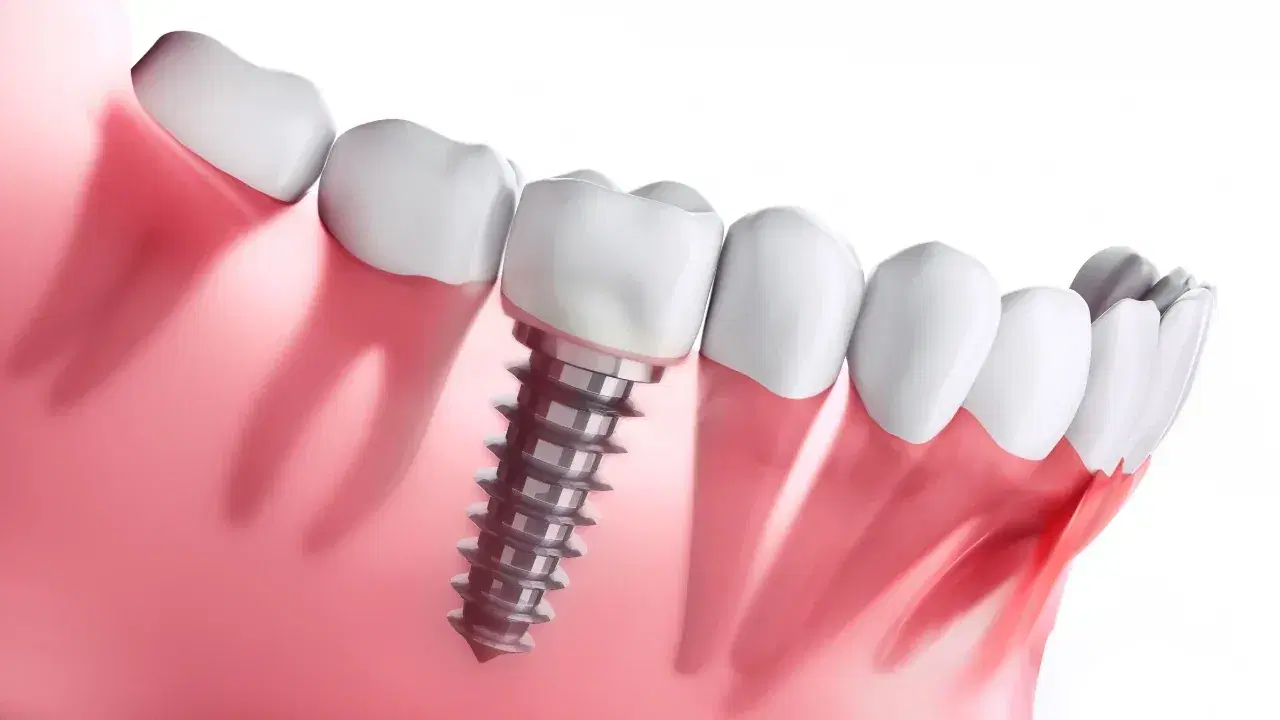
Dental implants are medical devices used to replace missing teeth or to support restorations such as crowns, bridges, and dentures. They can improve chewing efficiency, speech, comfort, and confidence, and they may help limit the jawbone changes that can follow tooth loss. This article focuses only on dental implants: what they are, the main implant types and configurations, and the key clinical decisions that determine which approach may be appropriate for a given patient.
What counts as a “dental implant”?
The FDA describes a dental implant system as including components such as the implant body (the part placed in the jaw), the abutment (the connector), and the abutment screw. In everyday conversation, “implant” sometimes refers only to the implant body, but treatment planning is really about the full system: how the implant will be placed, how it will integrate with bone, how the soft tissue will be managed, and what type of restoration will ultimately be attached.
Type 1: Implant design based on where it sits in relation to bone
One way to categorize dental implants is by how the implant is positioned relative to the jawbone and the soft tissues.
Endosteal implants
Endosteal implants are placed within the jawbone. They are the most common type used today. The implant body is typically shaped like a screw (threaded), though cylindrical designs exist. After placement, the implant undergoes a healing period in which the bone and implant surface establish a stable interface (often discussed clinically as osseointegration). Endosteal implants are used for single-tooth replacement, multi-tooth bridges, and implant-supported dentures, depending on the number and distribution of implants.
Subperiosteal implants
Subperiosteal implants are positioned on top of the jawbone but beneath the gum tissue. Rather than a screw placed into bone, this approach uses a custom framework that rests on the bony surface and supports posts that protrude through the gum to hold a prosthesis. Subperiosteal implants are less commonly used than endosteal implants and are typically discussed in more complex anatomic situations. Whether this is an appropriate option depends heavily on bone anatomy, soft-tissue conditions, and the clinician’s experience and judgment.
Zygomatic implants (upper jaw, selected cases)
Zygomatic implants are longer implants that obtain anchorage in the zygomatic bone (cheekbone) rather than the maxillary alveolar bone. They may be considered in selected cases of severe bone deficiency in the upper jaw when conventional implant placement would otherwise require extensive grafting. This is a specialized procedure with distinct anatomic, restorative, and complication considerations.
Type 2: Implant diameter and length (including “mini” implants)
Implant sizing is not purely a matter of preference; it is constrained by bone volume, proximity to anatomic structures (such as the inferior alveolar nerve or maxillary sinus), and the functional load expected in a given area.
Standard-diameter implants
Standard-diameter implants are commonly used when there is sufficient bone width and when the restorative plan calls for a conventional emergence profile and load distribution. They are frequently used for posterior teeth (molars and premolars) when bone conditions are favorable, as these areas tend to experience higher bite forces.
Narrow-diameter and “mini” dental implants
Narrow-diameter implants (including what some clinicians call mini dental implants) may be considered when space is limited, bone width is reduced, or when the restorative plan benefits from a smaller implant platform. They are also discussed in some implant-retained denture scenarios. However, smaller diameter can change the biomechanical picture, so case selection and occlusal planning are important. “Mini implant” is sometimes used inconsistently in marketing and patient education, so it is worth asking a clinician what diameter range they mean and what tradeoffs are involved.
Type 3: One-piece vs two-piece implant systems
Implant systems are often described as one-piece or two-piece based on how the implant and abutment are configured.
Two-piece implants
Two-piece systems include an implant body placed in the bone and a separate abutment connected later. This design offers restorative flexibility: abutment type, angle, and height can be selected based on the final tooth position and soft-tissue needs. Two-piece implants are widely used for both single-unit crowns and multi-unit prostheses.
One-piece implants
One-piece systems integrate the implant and abutment into a single component. They can reduce the number of connections and components, but they may limit restorative flexibility, particularly when angulation correction is needed. They can also influence the surgical approach because the abutment portion is present immediately at placement.
Type 4: Restoration purpose (what the implant is supporting)
From a patient’s perspective, the most meaningful “type” may be what the implant supports day-to-day: one tooth, several teeth, or a full arch.
Single-tooth dental implant (implant crown)
This approach replaces one missing tooth. A single implant is placed, then restored with a crown. It can be an appealing option because it does not require preparing adjacent teeth the way some conventional bridges do. The esthetic and functional result depends on bone volume, soft-tissue contour, implant positioning, and the crown’s design, especially in the front of the mouth.
Implant-supported bridge
When multiple adjacent teeth are missing, implants can support a bridge. Rather than placing one implant per missing tooth, implants may be strategically placed to support a multi-unit restoration. The exact number of implants depends on span length, bone quality, bite forces, and the restorative design (including cantilever considerations, if any).
Implant-retained vs implant-supported dentures (partial or full)
Implants can be used with removable dentures in two broad ways:
Implant-retained dentures primarily improve retention (how well the denture stays in place) using attachments such as locator-style components.
Implant-supported dentures are designed so implants also bear a significant portion of functional load, often through a bar or fixed framework.
These distinctions affect comfort, cleaning routines, maintenance needs, and cost. They also influence the number of implants recommended and the design of the prosthesis.
Type 5: Timing and loading protocols
Dental implant treatment is not a single uniform timeline. Clinicians often describe timing in terms of when the implant is placed relative to extraction and when the restoration is placed relative to surgery.
Immediate vs delayed implant placement (relative to extraction)
Immediate placement: the implant is placed at the time of tooth extraction.
Delayed placement: the implant is placed after a healing period following extraction.
Immediate placement may reduce the number of surgical appointments, but it is not automatically the best choice. Infection status, socket anatomy, soft-tissue considerations, and the ability to achieve primary stability all influence suitability.
Immediate, early, or conventional loading (relative to restoration)
Loading refers to when the implant is put into function with a crown, bridge, or denture:
Immediate loading: a restoration is attached very soon after implant placement (sometimes the same day).
Conventional (delayed) loading: the restoration is attached after a longer healing period.
Immediate loading may be possible in selected cases, but it typically depends on achieving adequate primary stability, controlling bite forces on the provisional restoration, and careful case selection. In many practices, a temporary (provisional) crown may be used during healing, with the final restoration delivered later.
Type 6: Implant material (titanium vs zirconia, in broad terms)
Material selection is another commonly discussed “type,” particularly for patients concerned about esthetics near the gumline or who have specific preferences about metals.
Titanium implants
Titanium and titanium alloys are widely used in dental implant systems. They have a long clinical track record and are available across many implant designs and restorative platforms. Most implant component ecosystems (implant bodies, abutments, multi-unit components, and prosthetic parts) are most developed in titanium-based systems.
Zirconia implants
Zirconia implants are ceramic implants that may be considered in selected cases, often with an emphasis on esthetics or material preference. Availability of component options, surgical-restorative workflows, and long-term data can vary by system, so the practical differences should be discussed in detail with the treating clinician.
Adjunct procedures that change the “type” of treatment (even if the implant is the same)
Two patients can receive the same implant model yet have very different experiences because of supporting procedures required to create a stable, healthy foundation.
Bone grafting and ridge augmentation
If the jawbone is too thin or too low in height for predictable implant placement, grafting may be recommended. This can involve adding bone or bone substitute material to rebuild the ridge, sometimes with membranes or biologic adjuncts depending on the clinical situation. Grafting can be performed before implant placement or at the time of implant placement, depending on defect size, stability requirements, and the treatment plan.
Sinus augmentation (sinus lift)
In the upper posterior jaw, the maxillary sinus can limit available bone height. A sinus augmentation procedure may be discussed to create sufficient bone volume for implants. The approach (lateral window vs crestal) and timing vary based on existing bone height and implant stability.
Soft-tissue grafting
Soft-tissue management can be critical for comfort, hygiene, and esthetics. In some cases, gum grafting or tissue contouring is used to improve the thickness and stability of the tissue around implants, especially in areas where esthetics matter or where tissue is thin and more prone to recession.
Benefits, risks, and maintenance (dental-only considerations)
Dental implants can offer meaningful benefits, but they also involve surgical and long-term considerations. The FDA notes that implants carry risks such as infection and device failure, and decisions should be made carefully with a qualified provider.
Potential benefits include:
Improved chewing ability and comfort compared with some removable options
Stable support for crowns, bridges, or dentures
No need to prepare adjacent teeth as in some conventional bridge designs
Support for facial structure and function after tooth loss (with outcomes influenced by many patient-specific factors)
Potential risks and complications include:
Postoperative discomfort, swelling, or bruising
Infection or impaired healing
Nerve-related symptoms in the lower jaw when anatomy is close
Sinus-related issues in the upper jaw in certain anatomic contexts
Mechanical complications (loosening or fracture of screws, chipping or fracture of restorations)
Inflammatory complications around implants that require professional management and improved home care
Long-term success is closely tied to maintenance. Implants require consistent oral hygiene and regular professional follow-up. Patients should expect ongoing monitoring of gum health, bite forces, and the condition of implant components and restorations over time.
Questions to ask in a dental implant consultation
What type of implant approach are you recommending for my case, and why? Ask whether the plan is endosteal, subperiosteal, zygomatic, narrow/mini, or another approach, and what alternatives exist.
What will the implant support? Clarify whether the plan is a single crown, bridge, removable overdenture, or a fixed full-arch prosthesis.
What is the timeline? Ask about extraction timing, healing periods, and whether loading will be immediate or delayed.
Do I need grafting or sinus augmentation? If so, ask how it affects cost, healing time, and predictability.
What maintenance should I plan for? Ask how you should clean around the implant, how often you should be seen, and what signs of problems should prompt a call.
What are the most common complications you see, and how are they handled? A practical, experience-based answer is often more useful than a generic list of risks.
Takeaway
“Dental implant” is not a single uniform product or procedure. The meaningful differences include how the implant is positioned relative to bone (endosteal, subperiosteal, or specialized anchorage such as zygomatic), implant size and configuration, whether the system is one-piece or two-piece, what the implant supports (a single tooth, a bridge, or a denture), and the timeline for placement and loading. The right choice is case-specific and depends on anatomy, health history, bite forces, esthetic goals, and a realistic commitment to long-term maintenance.