
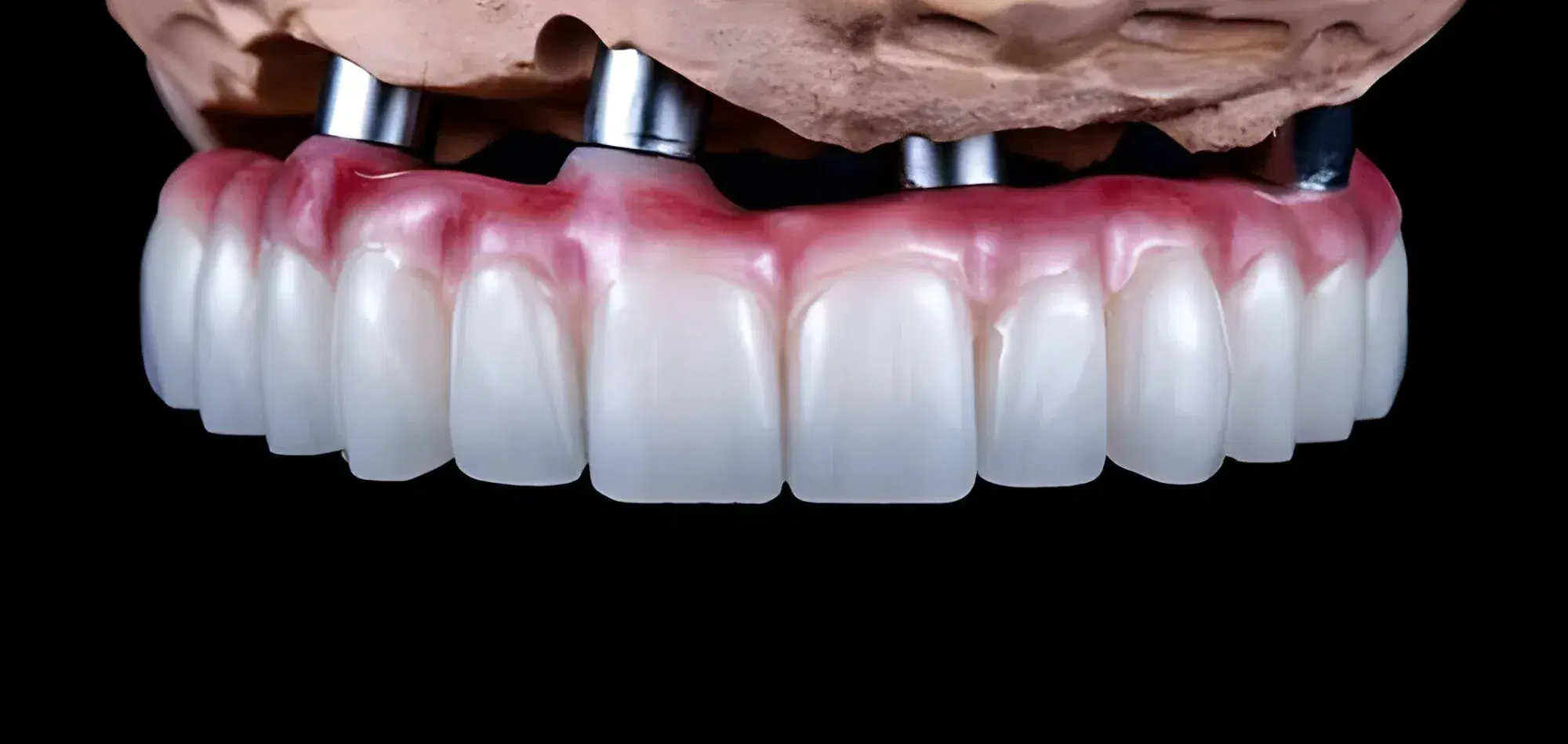
Full arch dental implants replace an entire upper or lower row of teeth with a stable implant-supported restoration. Unlike conventional dentures, they connect firmly to implants placed within the jawbone.
For suitable patients, full arch dental implants can improve chewing, speech, appearance, and everyday confidence. Treatment may support fixed teeth or a removable overdenture.
Your plan will depend on bone levels, gum health, medical history, and cleaning ability. This guide explains the procedure, benefits, limitations, recovery, costs, and long-term care.
What Are Full Arch Dental Implants?
A full arch restoration replaces every tooth within one dental arch. It can restore the upper jaw, lower jaw, or both jaws.
Dental implants act as artificial tooth roots beneath the restoration. These implants create stronger support than gum-based dentures usually provide.
The final teeth may remain fixed inside your mouth. Alternatively, you may receive a removable restoration that connects to implant attachments.
Dentists may describe fixed treatments as complete-arch bridges. Removable versions often carry the name implant overdentures.
How Does a Full Arch Implant System Work?
Your dentist places several implants at carefully planned positions. These implants distribute chewing forces across the jawbone.
An abutment connects each implant with the restoration. The final bridge or overdenture then uses these connections for support.
The implants need stable surrounding bone. Over time, bone forms a close biological connection around each implant surface.
Dentists call this process osseointegration. Successful integration creates the foundation for comfortable, long-term function.
Fixed and Removable Full Arch Restorations
A fixed full arch bridge stays attached to the implants. Only a dental professional should remove it during maintenance or repairs.
Many patients prefer fixed teeth because they feel secure. However, fixed restorations require detailed cleaning beneath the bridge.
A removable implant overdenture attaches firmly to special connectors. You can remove it for cleaning and overnight care.
Removable options often support the lips and replace lost gum volume. They may also cost less than fixed full arch bridges.
Your dentist should compare both choices carefully. The best design must suit your anatomy, priorities, budget, and hygiene abilities.
How Many Implants Support a Full Arch?
A fixed one-piece arch generally needs at least four well-distributed implants. However, some treatment plans use five, six, or more implants.
The required number depends on bone quality and jaw shape. Restoration design and biting forces also influence this decision.
Some techniques place four implants across the arch. Dentists may angle the back implants to avoid important anatomical areas.
Other plans use six implants for broader support. Additional implants may also provide options after future mechanical complications.
More implants do not automatically create a better result. Accurate positioning and balanced force distribution matter equally.
Who May Qualify for Full Arch Implant Treatment?
Adults with complete tooth loss may qualify for full arch treatment. Patients with severely damaged remaining teeth may also receive consideration.
You need enough healthy bone around the planned implant positions. Your gums should also remain free from uncontrolled disease.
Your dentist must review your general health and medications. Certain conditions can affect healing, bleeding, infection risk, or bone stability.
Controlled medical conditions do not always prevent implant treatment. However, your dental team may require medical guidance before surgery.
You also need realistic expectations about maintenance. Implant teeth still require daily cleaning and regular professional examinations.
When Might Full Arch Implants Be Unsuitable?
Uncontrolled gum disease can create an unhealthy implant environment. Your dentist will usually treat active inflammation before implant surgery.
Severe bone loss may complicate safe placement. Bone grafting or another implant approach may become necessary.
Uncontrolled diabetes can interfere with healing. Your dentist may delay treatment until your medical condition improves.
Smoking can increase surgical and long-term concerns. Your clinician may recommend stopping before treatment and during recovery.
Poor cleaning habits can also threaten the result. A fixed restoration cannot protect implants from plaque-related inflammation.
The Consultation and Planning Process
Treatment begins with a detailed dental examination. Your dentist assesses remaining teeth, gum health, bite, and available restoration space.
Dental X-rays show general bone levels. Three-dimensional imaging provides detailed information about bone width and anatomical structures.
Digital scans may record your teeth and gums. Facial photographs can help the team design balanced tooth proportions.
Your dentist will also discuss your expectations. Tooth colour, shape, lip support, and smile position require careful planning.
A complete treatment plan should explain every stage. It should include temporary teeth, healing periods, materials, risks, and expected maintenance.
Tooth Extraction and Implant Placement
Some patients still have failing teeth before treatment. The dentist may remove those teeth during implant surgery.
Careful extraction helps preserve useful bone. The clinician also removes unhealthy tissue from each surgical area.
The dentist then prepares precise spaces within the jawbone. Each implant enters a position selected during digital planning.
Strong initial stability can support an immediate temporary bridge. Weak stability may require a different temporary restoration.
Not every patient should receive extraction and implants together. Your dentist may recommend a staged approach for safer healing.
Can You Receive Teeth on the Same Day?
Some patients leave surgery with a fixed temporary bridge. This approach is often described as immediate loading.
Same-day teeth do not represent the permanent restoration. The implants still need several months of protected healing.
The temporary bridge supports appearance and basic function. However, you must avoid excessive pressure during early recovery.
Your dentist may recommend a soft diet. Hard foods can overload healing implants or damage the temporary bridge.
Immediate loading requires suitable bone and strong implant stability. Your clinician should never select it for convenience alone.
Bone Grafting and Alternative Implant Options
Bone loss often follows long-term tooth loss. Previous gum disease and infections may reduce bone further.
Small defects may receive grafting during implant placement. Larger defects could require a separate grafting procedure.
Upper back areas may need sinus augmentation. This treatment creates additional support beneath the sinus cavity.
Severe upper jawbone loss may require advanced solutions. Your specialist might discuss longer or differently positioned implants.
Additional procedures increase complexity and recovery time. They may also raise the total treatment cost.
Your dentist should explain every alternative clearly. You should understand why each procedure supports the proposed result.
Recovery After Full Arch Implant Surgery
Swelling, bruising, and soreness may follow surgery. These symptoms usually improve gradually during the early recovery period.
Your dental team may recommend medication for discomfort. Follow every dosage instruction carefully.
Soft foods can protect the implants and temporary teeth. Eggs, yoghurt, pasta, and soft vegetables may feel comfortable.
Avoid biting hard objects during healing. Ice, nuts, and hard sweets can damage temporary restoration materials.
Gentle cleaning remains important after surgery. Your clinician should explain how to protect sensitive gum tissues.
Attend every follow-up appointment. These visits help the team monitor healing, stability, and bite pressure.
Benefits of Full Arch Dental Implants
Implant-supported teeth usually provide greater stability than conventional dentures. They reduce movement during speaking, eating, and laughing.
Greater stability may improve chewing confidence. You may also enjoy a wider variety of foods after healing.
A fixed bridge does not require daily denture adhesive. It also avoids the loose feeling associated with some traditional dentures.
Implants transfer chewing forces into the jawbone. This stimulation may help preserve bone around each implant position.
The restoration can also support facial proportions. Replacing lost teeth and tissue may improve lip and cheek support.
Many patients value the psychological benefits. Secure teeth can improve comfort during social and professional situations.
Possible Risks and Complications
Every implant procedure carries biological and mechanical risks. A successful operation cannot guarantee trouble-free lifetime performance.
An implant may fail to integrate with bone. Infection, movement, smoking, or weak bone can contribute.
Inflammation may develop around implant tissues. Without treatment, the condition can damage supporting bone.
The bridge can also chip, crack, or wear. Screws and other connecting components may loosen over time.
Poor bite balance can overload individual implants. Teeth grinding may increase pressure across the entire restoration.
Some complications require minor repairs. Others may require bridge removal, implant treatment, or replacement components.
Choosing the Restoration Material
Full arch restorations can use several materials. Each option offers different strengths, appearances, weights, and repair requirements.
Acrylic teeth over a metal framework can provide practical temporary or final restorations. However, acrylic may wear or chip.
Composite materials can offer straightforward repairs. They may also require maintenance after extended use.
Zirconia provides high strength and a polished appearance. However, its hardness requires careful bite planning.
Ceramic materials can create attractive results. Their suitability depends on design, available space, and implant distribution.
Your dentist should explain the chosen material. The decision should balance appearance, function, repairability, and cost.
Adapting to Your New Teeth
A full arch bridge may feel unfamiliar at first. Your tongue and facial muscles need time to adjust.
Speech changes can occur during the early period. Regular speaking practice often helps you adapt.
The bridge may feel thicker than natural teeth. This thickness can replace missing gum and bone volume.
Your bite may also feel different. The dentist can make small adjustments after reviewing your chewing pattern.
Report persistent discomfort or speech problems. Your team may need to refine the restoration’s contours.
Cleaning Fixed Full Arch Dental Implants
Fixed implant teeth require daily cleaning above and below the bridge. Plaque can collect along the gum-facing surface.
Use a soft toothbrush around visible surfaces. Focus carefully where the restoration approaches the gum line.
Special floss can pass beneath the bridge. Threaders may help you guide the floss through narrow spaces.
Interdental brushes can clean larger areas. A water flosser may support your routine when used correctly.
Your hygienist should select suitable tools. Oversized brushes may irritate tissues, while smaller brushes may leave plaque.
Professional cleaning remains essential. The dental team can reach deposits that home care may miss.
Cleaning Removable Implant Overdentures
Remove your overdenture according to professional instructions. Handle it above a towel or water-filled basin.
Brush every denture surface with a suitable brush. Abrasive toothpaste may scratch some materials.
Clean the implant attachments inside your mouth. Plaque often collects around the base of each connector.
Your dental team may recommend interdental brushes. They should demonstrate the correct size and technique.
Use only approved soaking products. Certain household cleaners can damage denture materials or metal components.
How Long Do Full Arch Implants Last?
Dental implants can function for many years with proper care. However, no implant system offers a permanent guarantee.
The implants and bridge have separate maintenance needs. The bridge may require repairs before the implants develop problems.
Daily hygiene strongly influences tissue health. Smoking and uncontrolled gum disease can increase long-term risks.
Teeth grinding may damage restoration materials. A protective night guard may reduce harmful pressure during sleep.
Regular examinations help detect early changes. Small repairs can sometimes prevent larger and more expensive complications.
Full Arch Dental Implant Costs
Treatment costs vary significantly between patients and locations. Clinical complexity affects the final price.
The estimate may include extractions, imaging, surgery, temporary teeth, and the permanent bridge. Bone grafting can create additional charges.
Restoration materials also influence costs. Zirconia and complex laboratory designs may carry higher fees.
Sedation and specialist treatment may increase the total amount. Future maintenance usually remains separate from the original treatment fee.
Request a detailed written estimate before treatment. Confirm which procedures, components, and follow-up appointments the price includes.
Insurance coverage varies between providers. Review exclusions, annual limits, and waiting periods carefully.
Choosing a Full Arch Implant Provider
Full arch treatment requires surgical and restorative experience. Ask how frequently the clinician completes similar cases.
The team should explain both benefits and limitations. Be cautious when a clinic promises guaranteed or maintenance-free results.
Ask which implant system and restoration material the clinic uses. Keep these details with your dental records.
Review temporary tooth arrangements before surgery. You should know what you will wear throughout every healing stage.
The clinic should also provide clear emergency support. Organized aftercare remains important when repairs or adjustments become necessary.
A second opinion may help with complex plans. Compare clinical reasoning rather than price alone.
Frequently Asked Questions
Are Full Arch Dental Implants Removable?
Some full arch restorations remain fixed inside the mouth. Only a dental professional should remove these bridges.
Implant overdentures remain removable. You can take them out for daily cleaning and overnight care.
Is Full Arch Implant Surgery Painful?
Local anaesthesia controls pain during surgery. Sedation may also support comfort during longer procedures.
Temporary soreness can develop after the appointment. Increasing or severe pain requires professional assessment.
How Long Does Full Arch Treatment Take?
Some patients receive temporary teeth during one surgical appointment. However, complete bone healing usually requires several months.
Bone grafting may extend the timeline. Your dentist should provide a personalized treatment schedule.
Can Full Arch Implants Fail?
An implant can fail during healing or later. Infection, movement, smoking, and poor maintenance may contribute.
Early professional care can limit further damage. Contact your clinic when pain, swelling, or movement develops.
Can Food Get Under a Fixed Implant Bridge?
Food can collect beneath full arch bridges. Careful restoration design and daily cleaning help manage this issue.
Persistent food trapping may require professional adjustment. Your dentist should examine the bridge and gum contours.
Can Older Adults Receive Full Arch Implants?
Age alone does not prevent implant treatment. General health, bone condition, and cleaning ability usually matter more.
Your dentist should review medications and medical conditions. Many older adults can qualify after careful assessment.
Can You Eat Normally With Full Arch Implants?
You must follow a soft diet during early healing. This precaution protects the implants and temporary restoration.
After integration, many patients enjoy improved chewing. However, very hard objects can still damage the bridge.
Do Full Arch Implants Prevent Bone Loss?
Implants stimulate bone around their placement sites. This support may reduce bone changes within those areas.
They cannot preserve every part of the jaw equally. Natural bone remodeling can continue elsewhere.
How Often Do Full Arch Implants Need Check-Ups?
Most patients need regular examinations and professional cleaning. The ideal frequency depends on personal risk factors.
Previous gum disease may require shorter intervals. Your dentist should create an individual maintenance schedule.
Are Full Arch Dental Implants Worth the Cost?
Many patients value their stability, appearance, and improved chewing ability. However, treatment requires surgery and long-term maintenance.
You should compare every suitable alternative. Your final decision should reflect health, expectations, and available budget.