
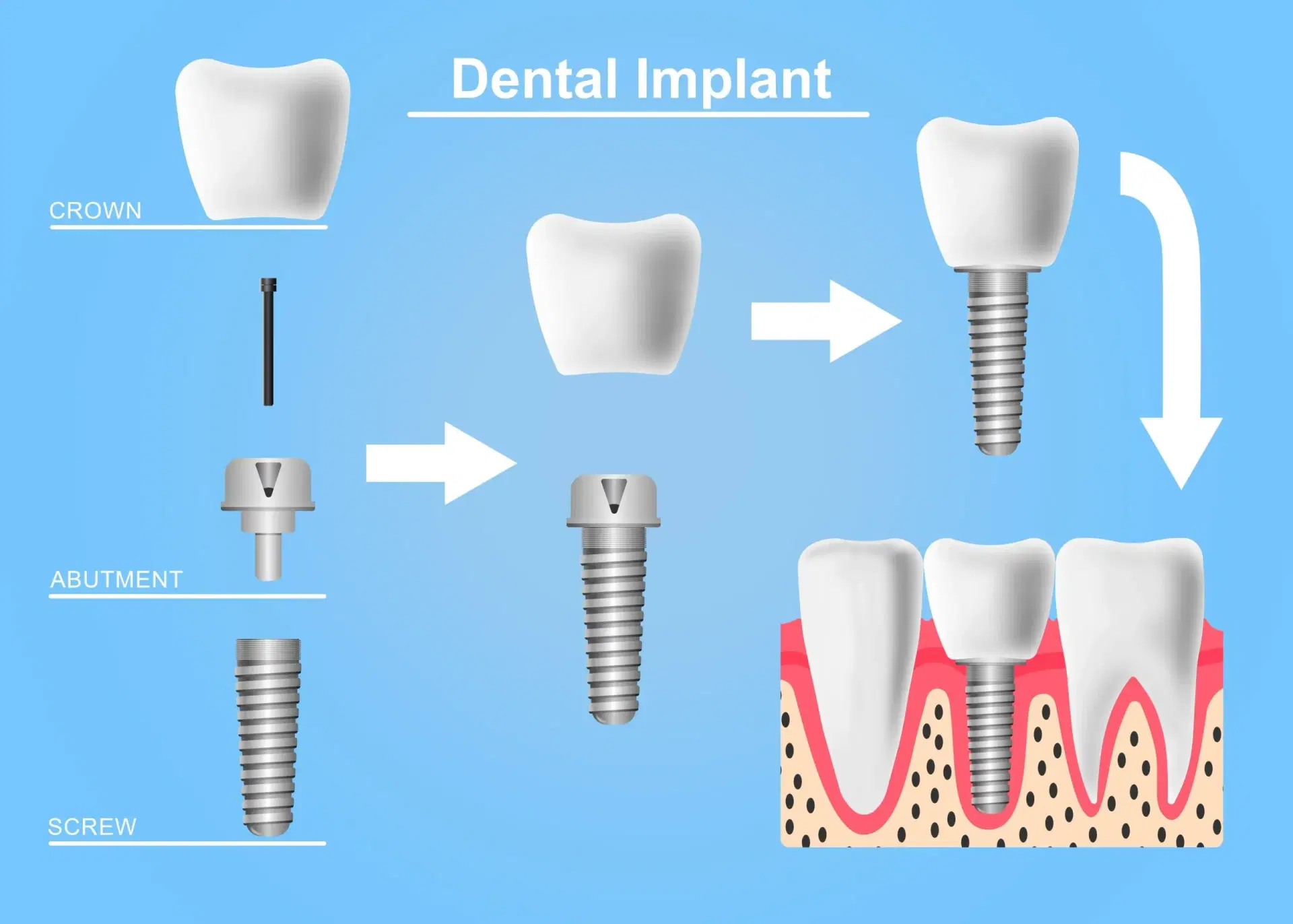
The main types of dental implants are endosteal, subperiosteal and zygomatic implants. Endosteal implants are placed directly into the jawbone and represent the standard option for most suitable patients. They can support a single crown, a dental bridge or an implant-supported denture.
Subperiosteal implants use a customized framework positioned beneath the gum and over the jawbone. Dentists may consider them in selected cases involving insufficient bone for conventional implant placement. Zygomatic implants are longer implants anchored in the cheekbone. They are mainly reserved for patients with severe upper-jaw bone loss who cannot receive conventional implants without extensive reconstruction.
Single-tooth implants, implant-supported bridges, overdentures and full-arch systems such as All-on-4 describe how replacement teeth attach to implants. They are treatment configurations rather than separate implant body types. Your dentist selects the appropriate option after assessing missing teeth, bone volume, gum health, general health and restorative needs.
What Are the Main Types of Dental Implants?
The main anatomical implant types are endosteal, subperiosteal, transosteal, and zygomatic implants.
Endosteal implants sit inside the jawbone and support most modern implant restorations. Subperiosteal implants use a custom framework positioned above bone and beneath the gum tissue. Transosteal implants cross both cortical plates, usually within the lower jaw. Dentists rarely use transosteal designs within contemporary routine practice. Zygomatic implants anchor within the cheekbone when the upper jaw has extreme bone loss. These categories describe where the implant gains support. They do not describe implant material, diameter, loading schedule, or the final prosthesis.
How Are Dental Implants Classified?
Dental implants require several classifications because one implant can belong to multiple categories simultaneously.
Placement categories include endosteal, subperiosteal, transosteal, and zygomatic implants.
Material categories commonly include titanium, titanium alloys, and zirconia.
Dimension categories include standard, short, narrow-diameter, and mini implants.
Construction categories include one-piece and two-piece systems.
Loading categories include immediate, early, and conventional loading.
Restorative categories include single crowns, bridges, overdentures, and fixed full-arch prostheses.
Surface and connection designs create additional technical classifications.
A short zirconia implant could therefore be endosteal, one-piece, and conventionally loaded.
What Are Endosteal Dental Implants?
Endosteal implants are root-shaped fixtures placed directly within the upper or lower jawbone.
They represent the most frequently used dental implant category. Most designs use threaded cylindrical or tapered bodies resembling natural tooth roots. The implant supports an abutment after gaining sufficient stability within bone. That abutment then carries a crown, bridge, or removable overdenture attachment. Endosteal placement requires adequate bone volume or a suitable augmentation plan. Implant length, diameter, surface, and thread design vary between systems. Root-form endosteal implants should not be confused with blade implants, which use a flatter historical design.
What Are Subperiosteal Dental Implants?
Subperiosteal implants use a customised framework placed over the jawbone and beneath the gum tissue.
Posts extending through the gum support the planned dental restoration. Earlier subperiosteal designs required extensive impressions or surgical bone exposure. Digital imaging and additive manufacturing now allow patient-specific frameworks without that traditional workflow. Clinicians may consider them when severe bone loss prevents conventional implant placement. However, current evidence remains less established than evidence for endosteal implants. Potential problems include soft-tissue exposure, inflammation, framework misfit, infection, and fixation failure. Treatment requires careful case selection and long-term maintenance planning.
What Are Zygomatic Dental Implants?
Zygomatic implants are long implants anchored within the cheekbone for severely resorbed upper jaws.
They pass from the upper jaw region toward the dense zygomatic bone. Clinicians usually combine them with conventional front implants when restoring a complete upper arch. Their principal indication is extreme maxillary atrophy, although published definitions of extreme atrophy remain inconsistent. Zygomatic treatment may reduce extensive bone grafting and shorten rehabilitation. However, it requires advanced surgical training and detailed three-dimensional planning. Documented complications include sinusitis, soft-tissue problems, neurological symptoms, and failed integration. These implants are not routine substitutes for standard implants.
What Are Short and Narrow-Diameter Implants?
Short and narrow-diameter implants modify implant dimensions to accommodate limited bone or restricted spaces.
ITI research commonly defines short implants as six millimetres or shorter. They may reduce grafting within selected posterior jaw areas. Narrow-diameter implants can fit thin ridges or small spaces between adjacent teeth. However, reduced dimensions may limit restorative design or increase mechanical demands. Diameter and length should follow the planned crown, bite forces, and available bone. These implants remain endosteal implants rather than completely independent anatomical categories. Evidence supports selected applications, but clinicians should not use reduced dimensions only to simplify surgery.
What Are Mini Dental Implants?
Mini dental implants are narrow one-piece implants commonly used to retain removable dentures.
Definitions vary, but many mini implants measure below three millimetres in diameter. Their narrow design can reduce surgical complexity within selected thin ridges. A ball attachment often forms part of the implant’s integrated head. The corresponding denture contains housings that connect with those attachments. Mini implants can improve retention for unstable lower dentures. However, they do not automatically replace standard implants for every crown or fixed bridge. Smaller dimensions affect load capacity, component choices, and possible maintenance. Treatment planning must consider bone, bite forces, and prosthetic design.
Are Titanium or Zirconia Dental Implants Better?
Titanium remains the most established implant material, while zirconia provides a metal-free ceramic alternative.
The FDA identifies titanium and zirconium oxide as the principal materials within modern implant systems. Titanium offers extensive clinical documentation, component availability, and flexible two-piece restorative options. Zirconia has a tooth-coloured appearance and avoids visible grey metal near thin tissues. However, current reviews do not show zirconia providing superior clinical results. Some comparative evidence reports better early survival and bone outcomes with titanium. Zirconia systems also vary between one-piece and newer two-piece designs. Material choice should consider evidence, implant position, tissue thickness, restoration needs, and provider experience.
What Is the Difference Between One-Piece and Two-Piece Implants?
One-piece implants combine the implant body and abutment, while two-piece implants separate those components.
A one-piece design has no adjustable connection between the implanted body and restorative portion. This construction can reduce component complexity but limits later angulation changes. The exposed abutment may also require immediate protection during healing. Two-piece implants allow clinicians to choose different abutments after implant placement. They support wider restorative correction and retrievability options. However, their implant-abutment interface creates another mechanical and biological consideration. Evidence does not establish one design as universally superior. Bone anatomy, placement accuracy, loading, and restorative requirements should guide the choice.
What Are Immediate, Early, and Conventional Implant Loading?
Loading classifications describe when the restoration connects to an implant, not a separate implant body type.
Immediate restoration or loading occurs within one week after placement. Early loading follows after one week but before conventional healing concludes. Conventional loading generally follows a longer healing period without functional restoration. Immediate placement has a different meaning. It describes inserting the implant during the same procedure as tooth extraction. An immediately placed implant does not always receive an immediate crown. Loading decisions depend on primary stability, bone quality, prosthetic design, and bite control. Marketing often combines these separate concepts incorrectly.
Is All-on-4 a Type of Dental Implant?
All-on-4 is a full-arch treatment concept rather than a distinct dental implant material or anatomical type.
The concept supports one fixed complete bridge using four strategically distributed endosteal implants. Two rear implants often tilt to use available bone and reduce posterior cantilever length. Those implants may come from several compatible commercial systems. The term therefore describes implant number, distribution, angulation, loading, and prosthetic planning. It does not identify one universal implant shape or surface. Other full-arch plans may use four, five, six, or more implants. Implant quantity should follow bone anatomy and the complete prosthetic plan.
Are Fixed Bridges and Overdentures Different Implant Types?
Fixed bridges and overdentures are prosthetic options supported by implants, not different implant body categories.
A fixed bridge remains attached and usually requires professional removal. An overdenture connects to implants but remains removable for daily cleaning. Both options can substantially improve patient-reported outcomes compared with conventional complete dentures. Their implant numbers and positions may differ. Fixed full-arch bridges generally require at least four strategically distributed implants. Lower overdentures may use fewer implants in selected situations. Removable designs can offer easier hygiene for some patients. The final choice should consider bone, lip support, dexterity, maintenance, repair access, and personal preference.
Which Dental Implant Type Is Right for You?
The appropriate dental implant depends on anatomy, health, missing teeth, restoration design, and long-term maintenance needs.
A complete assessment should answer these questions:
How much usable bone exists at the planned implant sites?
Does the treatment replace one tooth, several teeth, or a complete arch?
Will the final restoration remain fixed or removable?
Are grafting, short implants, or advanced alternatives being considered?
Can the chosen implant support the expected bite forces?
Are replacement components available within your home country?
Does your medical history affect healing or surgical risk?
Can you clean and maintain the proposed prosthesis effectively?
What happens if one implant or component fails?
Three-dimensional imaging should support complex surgical planning.